About this ebook
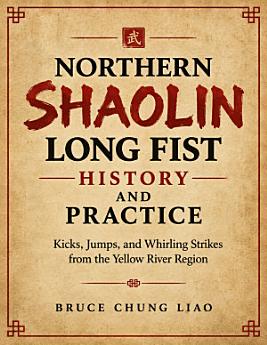
This isn't another surface-level introduction to kung fu. It's a deep dive into the Northern Long Fist family—the wide-stanced, kick-heavy, leg-driven fighting system born along the Yellow River in Henan, Shandong, and Hebei provinces, where farmers, escort guards, opera performers, and Hui Muslim martial communities forged a practical combat art that would eventually spread across China and the world.
What Makes This Book Different
Most martial arts books pick a lane—history or technique. This one deliberately stitches them together, so every kick, stance, and strike connects back to a real person, a real place, or a real problem that shaped it. You'll not only learn how to perform Northern Long Fist's signature techniques, but why they exist, who carried them forward, and how they survived a century of revolution, war, and cultural upheaval.
Inside, you'll discover:
The true, documented history of the Shaolin Monastery—separating the Bodhidharma legend from the stone-stele evidence, and tracing the real lineage from Zhao Yuan through Gan Fengchi, Yan Jiwen, and Gu Ruzhang
The story of Gu Ruzhang, one of the famous "Five Southbound Tigers," whose 1928 National Guoshu Examination victory and independent Guangzhou school helped carry Northern Shaolin beyond its northern homeland
The legacy of Huo Yuanjia and the Chin Woo Athletic Association, the groundbreaking institution that opened Chinese martial arts to the public regardless of family lineage
A complete foundational curriculum: horse stance, bow stance, drop stance, core hand techniques, active blocking, and the footwork that powers everything else
The internal principles of root (gen), breath, and balance—the quiet skills behind loud, powerful technique
A full kicking arsenal: front stretch kick, side kick, snap kick, crescent kicks, heel kicks, and more
Jumping and aerial techniques, including the jumping front kick and double jump kick, with a safe, staged progression that respects your body
The whirlwind method: spinning kicks, the jumping whirlwind kick, lotus kick, and whirling strikes
Tan Tui—The Twelve Springing Legs: a line-by-line introduction to Northern Long Fist's foundational set, with its deep Hui Muslim heritage
How to read, learn, and practice traditional forms (taolu), including the Ten Road structure Gu Ruzhang established
Application, sparring, and a cautious first look at weapons—including the staff (gun), straight sword (jian), and broadsword (dao)
Modern training guidance: weekly programming, injury management, plateau-breaking, overtraining prevention, and how to find a genuine teacher
Who This Book Is For
Whether you're a complete beginner who has never set foot in a training hall, a current Long Fist practitioner who wants the history and reasoning behind movements you already perform, or a crossover martial artist from karate, taekwondo, BJJ, or another tradition curious about Northern China's kicking and jumping expertise—this book meets you where you are and takes you further.
An Honest, Human Approach
Bruce Chung Liao writes with a rare combination of deep respect and refreshing honesty. He tells you plainly when something is hard, when it takes years rather than weeks, and when a popular legend doesn't hold up under historical scrutiny. He shares real student stories—like Sarah Whitfield, who began training at forty-two after two knee operations, and James Hartley, whose premature jumping kick attempt ended in an undignified sprawl—to illustrate why patient, staged progression matters more than ego.
He also addresses the Hui Muslim contribution to Northern Long Fist, the role of escort companies (biaoju) and opera troupes, the significance of the threshing floor in shaping form floor patterns, and the geographic and climatic factors that produced long, extended technique rather than southern China's compact close-range style.
A Complete Martial Arts Education
This is more than a technique manual. It's a history book, a training guide, and a philosophical companion—a resource you'll return to for years as your practice deepens. With a comprehensive glossary of Hanyu Pinyin terms, a note on historical sources, and practical answers to the most common beginner questions, Northern Shaolin Long Fist is designed to be the definitive English-language introduction to this remarkable tradition.
The Tradition That Refused to Disappear
Northern Long Fist survived floods, warlords, foreign occupation, civil war, and political upheaval that gave it every reasonable excuse to vanish. It endured because ordinary people—generation after generation—found something in this demanding practice worth the sustained effort it asks of everyone who takes it seriously.
Now it's your turn.
Whether you're taking your first horse stance or refining decades of practice, Northern Shaolin Long Fist: History and Practice will change how you understand Chinese martial arts—and what your own body is capable of.
Discover more
About the author
Bruce Chung Liao has spent much of his adult life doing one thing exceptionally well: teaching Northern Long Fist to ordinary people who never believed they could do it.
His own training began in a family tradition tracing back to teachers active in the escort company and civilian martial arts institute movements that shaped modern Chinese martial arts—the same world of biaoju guards, travelling opera troupes, and early twentieth-century institutions like the Chin Woo Athletic Association and the Central Guoshu Institute that fill the pages of this book. That inheritance isn't a marketing claim for Bruce; it's a lived reality that informs every page he writes and every class he teaches.
What sets Bruce apart as a teacher—and now as an author—is his refusal to romanticize. He doesn't inflate lineage claims. He doesn't repeat the Bodhidharma legend as settled fact. He doesn't pretend that a fifty-eight-year-old retiree and a nineteen-year-old gymnast will progress at the same pace. Instead, he offers something far more valuable: honest, patient, staged instruction that meets students exactly where they are, whether that's a nervous adult beginner standing in a horse stance for the first time or an experienced practitioner refining a whirlwind kick after decades of training.
His teaching philosophy, distilled across years of instruction, rests on a simple conviction: ordinary, sustained effort—not exceptional natural talent—produces capable, lifelong practitioners. He has watched it happen again and again. Sarah Whitfield, who began training at forty-two after two knee operations and now holds a stance most twenty-year-olds struggle to match. Robert Aldous, a retired postal worker who joined at fifty-eight and spent a year on nothing but standing jumps before adding height. James Hartley, whose early overconfidence led to a spectacular sprawl across the training mat—and whose patient six-week rebuild taught him more than any lecture could have.
Bruce doesn't just teach technique. He teaches how to learn—how to listen to your body, how to distinguish ordinary training discomfort from genuine warning signs, how to structure practice across months and years rather than a single enthusiastic burst, and how to honor a demanding tradition without sacrificing your own physical reality to an idealized standard.
He lives and teaches with his family, continuing to train in the same demanding curriculum this book describes. And like every honest teacher eventually admits, he continues to learn from his own students as much as he ever taught them—a humility that shines through every chapter of Northern Shaolin Long Fist: History and Practice.