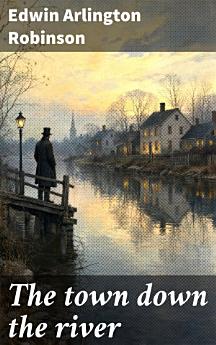
The town down the river: A book of poems
Edwin Arlington Robinson
Jun 2026 · Good Press
Ebook
22
Pages
family_home
Eligible
info
About this ebook
In The Town Down the River: A Book of Poems, Edwin Arlington Robinson extends the meditative, psychologically acute verse for which he is best known, assembling lyrics and narrative poems marked by formal control, tonal gravity, and moral introspection. The collection belongs to the late nineteenth- and early twentieth-century transition from high Victorian poetics to a more modern inwardness: its meters and rhymes are disciplined, yet its deepest energies lie in ambiguity, solitude, failure, and the hidden dramas of ordinary lives. Robinson's poetry resists ornament for precision, giving his speakers and subjects a stark, memorable humanity. Robinson, born in Maine in 1869, drew heavily on the social textures and disappointments of small-town New England, transforming local observation into universal art. His career was shaped by financial hardship, personal loss, and a persistent fascination with the inner life of individuals estranged from communal expectation. These biographical pressures help explain the collection's sympathy for loneliness and its refusal of easy consolation, even as it preserves a grave ethical seriousness. This volume is especially recommended to readers of American poetry who value subtle characterization, formal elegance, and emotional depth. It will reward those interested in the evolution of modern American verse and in poetry that finds tragic significance in seemingly modest lives.
In The Town Down the River: A Book of Poems, Edwin Arlington Robinson extends the meditative, psychologically acute verse for which he is best known, assembling lyrics and narrative poems marked by formal control, tonal gravity, and moral introspection. The collection belongs to the late nineteen...
Rate this ebook
Tell us what you think.
Reading information
Smartphones and tablets
Install the Google Play Books app for Android and iPad/iPhone. It syncs automatically with your account and allows you to read online or offline wherever you are.
Laptops and computers
You can listen to audiobooks purchased on Google Play using your computer's web browser.
eReaders and other devices
To read on e-ink devices like Kobo eReaders, you'll need to download a file and transfer it to your device. Follow the detailed Help Center instructions to transfer the files to supported eReaders.