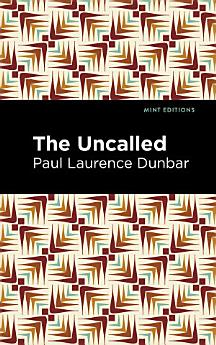
The Uncalled

· Graphic Arts Books
Ebook
126
Pages
Tools
Eligible

About this ebook

The Uncalled (1898) is a novel by African American author Paul Laurence Dunbar. Published while Dunbar was at the height of his career as one of the nation’s leading black poets, The Uncalled marked his debut as a novelist with a powerful vision of faith and perseverance who sought to capture and examine the diversity of the African American experience. When his mother dies, Freddie Brent—whose father is presumed dead—is officially orphaned. Although some members of the church community think it best to send him to the local orphanage, Miss Hester, an unmarried older woman, declares it her duty to provide for the boy. Having never raised a child before, however, she struggles to ascertain and fulfill Freddie’s needs, focusing instead on her perception of his troubled upbringing and punishing the boy for his parents’ supposed sinfulness. Freddie looks forward to visits from Eliphalet Hodges, Miss Hester’s longtime suitor, who acts as a father figure and shows him kindness and respect. With a beautifully designed cover and professionally typeset manuscript, this edition of Paul Laurence Dunbar’s The Uncalled is a classic of African American literature reimagined for modern readers.
The Uncalled (1898) is a novel by African American author Paul Laurence Dunbar. Published while Dunbar was at the height of his career as one of the nation’s leading black poets, The Uncalled marked his debut as a novelist with a powerful vision of faith and perseverance who sought to capture and...

Discover more

About the author

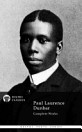
Paul Laurence Dunbar (1872-1906) was an African American poet, novelist, and playwright. Born in Dayton, Ohio, Dunbar was the son of parents who were emancipated from slavery in Kentucky during the American Civil War. He began writing stories and poems as a young boy, eventually publishing some in a local newspaper at the age of sixteen. In 1890, Dunbar worked as a writer and editor for The Tattler, Dayton’s first weekly newspaper for African Americans, which was a joint project undertaken with the help of Dunbar’s friends Wilbur and Orville Wright. The following year, after completing school, he struggled to make ends meet with a job as an elevator operator and envisioned for himself a career as a professional writer. In 1893, he published Oak and Ivy, a debut collection of poetry blending traditional verse and poems written in dialect. In 1896, a positive review of his collection Majors and Minors from noted critic William Dean Howells established Dunbar’s reputation as a rising star in American literature. Over the next decade, Dunbar wrote ten more books of poetry, four collections of short stories, four novels, a musical, and a play. In his brief career, Dunbar became a respected advocate for civil rights, participating in meetings and helping to found the American Negro Academy. His lyrics for In Dahomey (1903) formed the centerpiece to the first musical written and performed by African Americans on Broadway, and many of his essays and poems appeared in the nation’s leading publications, including Harper’s Weekly and the Saturday Evening Post. Diagnosed with tuberculosis in 1900, however, Dunbar’s health steadily declined in his final years, leading to his death at the age of thirty-three while at the height of his career.

Paul Laurence Dunbar (1872-1906) was an African American poet, novelist, and playwright. Born in Dayton, Ohio, Dunbar was the son of parents who were emancipated from slavery in Kentucky during the American Civil War. He began writing stories and poems as a young boy, eventually publishing some i...

Rate this ebook

Tell us what you think.

Reading information

Smartphones and tablets
Install the Google Play Books app for Android and iPad/iPhone. It syncs automatically with your account and allows you to read online or offline wherever you are.
Laptops and computers
You can listen to audiobooks purchased on Google Play using your computer's web browser.
eReaders and other devices
To read on e-ink devices like Kobo eReaders, you'll need to download a file and transfer it to your device. Follow the detailed Help Center instructions to transfer the files to supported eReaders.