About this ebook
What determines whether a community bends under pressure - or adapts and grows stronger?
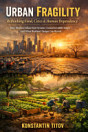
In this powerful third volume of the resilience trilogy, Konstantin Titov explores the biological, ecological, and structural foundations of long-term stability. Moving beyond surface-level sustainability narratives, this book examines how seeds, diversity, ecological balance, and local systems form the hidden architecture of resilient societies.
This is not a gardening manual. It is not a political manifesto. It is a systems-level exploration of how adaptation is designed - or lost.
At the center of the book lies a simple but urgent insight:
Resilience is not created during crisis. It is built quietly, in advance, through diversity, distributed capacity, and continuous learning.
Through vivid field examples and accessible systems thinking, this book explores:
• Why genetic diversity functions as biological risk management
• How monocultures increase efficiency - and fragility
• The hidden economic logic behind seed dependency
• The role of pollinators and ecological networks in maintaining food stability
• Why uniform systems collapse faster under environmental stress
• How local adaptation strengthens both farms and cities
• The structural parallels between ecological diversity and social resilience
From seed drawers to urban landscapes, from soil biology to city-scale food systems, this volume connects agriculture, governance, economics, and human autonomy into a single coherent framework.
In a world facing climate volatility, supply chain disruptions, and increasing centralization, the question is no longer how to optimize for the best year - but how to design for the unpredictable one.
This book argues that adaptability is architecture.
Diversity is infrastructure. And autonomy begins with systems that can learn.
Readers interested in regenerative agriculture, sustainable cities, resilient design, decentralized food systems, and long-term strategic thinking will find this volume both practical and philosophical.
Resilience is not a trend. It is a design discipline.
This book invites you to rethink food, cities, and human autonomy - not as isolated themes, but as interconnected systems that must evolve together.
Discover more
About the author
Konstantin Titov is a systems thinker, entrepreneur, and author focused on resilience, infrastructure, and human design. With a background spanning financial markets, algorithmic strategy, and large-scale publishing, he approaches cities and survival systems with the analytical precision of a trader and the structural mindset of an architect.
Today, living and working in Belize, he studies resilience not as theory but as practice—observing how land, climate, food production, and human settlement interact in real environments. His work bridges finance, infrastructure, psychology, and design, offering readers a calm, blueprint-driven perspective on how modern systems shape human survival.
Konstantin writes to illuminate structure—not to provoke, but to clarify. His books invite readers to see the invisible architecture of daily life—and to imagine how it could be redesigned to endure.