Keith Fraser
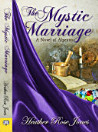
Newly rich scholarly girl meets Rose of Versailles-esque bodyguard girl. Hilarity ensues! This alt-historical fantasy/romance was a welcome change of pace from a lot of the stuff I've been reading recently. I enjoyed its more sedate pace compared to a lot of other genre fiction, and the unusual blend of different elements including: -Elements familiar from traditional historical/19th-century novels about the upper classes (family secrets, class distinctions, inheritance wrangling, the marriage market), here given a bit of a fresh coat of paint instead of being by-numbers window dressing like in a lot of historical romance. -Fantasy elements handled in an unusual and subtle way, in the form of "thaumaturgy" based on invoking saints through "mysteries" (with, crucially, the audience being kept largely in the dark for much of the book about whether this form of "magic" really works or is just a manifestation of faith). -Politics (in this case of an imaginary country somewhere in the Alps, but dealing with real historical events like the aftermath of the Napoleonic Wars). -Feminist/LGBT themes, here forming part of a whole rather than being the whole reason for the book's existence, and dealing with things other than romance or lack thereof, e.g. women's education. The novel also eschews a lot of the more in-your-face cliches of historical feminist fiction, political fantasy or even LGBT fiction (grandstanding speeches and courtroom battles, love at first sight, strawman bigots/villains, etc.), resulting in a subtler but more rewarding story. In particular, by avoiding obvious polemic or black-and-white characterization, the story's treatment of class/gender/sexual politics becomes much more effective. For example, no-one stands up and rants about it, but the portrayal of restrictions on the freedom of women in 19th-century European society is stronger for it - the fact that the main characters have no choice but to accept the (ridiculous and/or obnoxious to modern readers) limits that society places on them is much more thought-provoking than them magically overturning "the system" like in a more wish-fulfilling fantasy novel. If I have one major nitpick, it's that I found the constructed Alpennian language a bit of a distraction in places. In particular, especially early in the book, it wasn't always 100% clear what was a variation on a proper name (Efriturik for Frederick/Friedrich, Antuniet for Antoinette, etc.) and what was a title (Maisetra, Mesnera etc.). I also felt that the book was strongest in the more sedate, "slice of life" moments and lost some of its charm in the more conflict-heavy or dramatic sections, with some events (e.g. the point where the romance ceases to be unspoken) feeling a bit abruptly dealt with or more conventional. All in all, though, a well-written and refreshingly original novel that I highly recommend, particularly to readers looking for something a bit less frenetic and conventional than a lot of genre fiction (a book I'd compare it to is Cecilia Dart-Thornton's The Iron Tree, which similarly moves at a more sedate pace with a more "domestic" focus and a change from the usual fantasy stable of zappy magic and creatures).