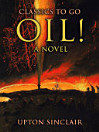
100%: The Story of a Patriot
Jun 2022 · DigiCat
Ebook
234
Pages
family_home
Eligible
info
About this ebook
In '100%', Upton Sinclair offers a poignant exploration of early 20th-century socio-economics in urban America, weaving a narrative rich with social criticism and observant detail around the burgeoning labor rights movements and the pervasive influence of political machines and big business. Sinclair's prose, steadfast in its clarity and earnestness, is a vehicle for his muckraking style, deeply rooted in realism. Sinclair entwines the reader in a literary fabric that serves not only to entertain but also to enlighten, crafting a novel that situates well within the political and literary context of its time, resonant with the struggles of the common man against a landscape of industrial giants and bureaucratic power. Upton Sinclair enters the literary arena as an activist-turned-novelist, his experience and compassion for the working class visibly informing his storytelling. A proponent of socialism, his works reflect his vision for social reform and economic justice. The inspiration for '100%' likely stems from Sinclair's own engagement with workers' rights and his observations of the machinations of capital that dim the American promise for the average citizen. His dedication to these themes is evident in the passion and precision with which he addresses them in his writing. For audiences seeking a window into the social complexities of the early 20th century, '100%' emerges as a compelling recommendation. Sinclair's work will particularly resonate with those interested in historical, political, and economic themes, and stands as a testament to the enduring power of the novel to confront and challenge societal structures. It invites readers to consider the cyclic nature of these issues and the narrative's contemporary relevance in the ongoing dialogue about economic disparity and political governance.
In '100%', Upton Sinclair offers a poignant exploration of early 20th-century socio-economics in urban America, weaving a narrative rich with social criticism and observant detail around the burgeoning labor rights movements and the pervasive influence of political machines and big business. Sinc...
Discover more
About the author
Upton Sinclair (1878–1968) was a prolific American writer and political activist, best known for his novel 'The Jungle' (1906), an exposé of the meatpacking industry that led to significant reforms in food safety in the United States. Born in Baltimore, Maryland, Sinclair demonstrated a flair for writing at an early age. He was a keen observer of societal injustices which influenced his work profoundly. Sinclair's advocacy for workers' rights, social justice, and political reform are themes consistently explored throughout his oeuvre. He wrote nearly 100 books across multiple genres, including 'Oil!' (1927), which inspired the film 'There Will Be Blood,' and 'Dragon's Teeth' (1942), which won him the Pulitzer Prize. Sinclair's literary style is characterized by its muckraking elements, where he combined detailed research with narrative storytelling to draw attention to the plights of the disadvantaged and to spur legislative changes. His works often evoke a sense of realism, depicting the gritty truths of the American landscape. Sinclair's ability to craft compelling narratives that also served a social purpose set a benchmark in literature, marrying creative expression with unabashed advocacy, a testament to his belief in the power of the written word to instigate progress and reform.
Upton Sinclair (1878–1968) was a prolific American writer and political activist, best known for his novel 'The Jungle' (1906), an exposé of the meatpacking industry that led to significant reforms in food safety in the United States. Born in Baltimore, Maryland, Sinclair demonstrated a flair for...
Rate this ebook
Tell us what you think.
Reading information
Smartphones and tablets
Install the Google Play Books app for Android and iPad/iPhone. It syncs automatically with your account and allows you to read online or offline wherever you are.
Laptops and computers
You can listen to audiobooks purchased on Google Play using your computer's web browser.
eReaders and other devices
To read on e-ink devices like Kobo eReaders, you'll need to download a file and transfer it to your device. Follow the detailed Help Center instructions to transfer the files to supported eReaders.