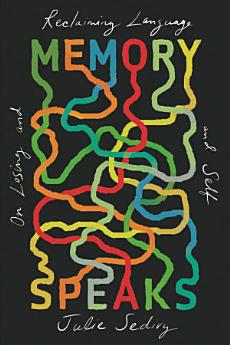
Memory Speaks: On Losing and Reclaiming Language and Self
Oct 2021 · Harvard University Press
star
2 reviews
Ebook
368
Pages
Tools
info
About this ebook
From an award-winning writer and linguist, a scientific and personal meditation on the phenomenon of language loss and the possibility of renewal.
As a child Julie Sedivy left Czechoslovakia for Canada, and English soon took over her life. By early adulthood she spoke Czech rarely and badly, and when her father died unexpectedly, she lost not only a beloved parent but also her firmest point of connection to her native language. As Sedivy realized, more is at stake here than the loss of language: there is also the loss of identity.
Language is an important part of adaptation to a new culture, and immigrants everywhere face pressure to assimilate. Recognizing this tension, Sedivy set out to understand the science of language loss and the potential for renewal. In Memory Speaks, she takes on the psychological and social world of multilingualism, exploring the human brain’s capacity to learn—and forget—languages at various stages of life. But while studies of multilingual experience provide resources for the teaching and preservation of languages, Sedivy finds that the challenges facing multilingual people are largely political. Countering the widespread view that linguistic pluralism splinters loyalties and communities, Sedivy argues that the struggle to remain connected to an ancestral language and culture is a site of common ground, as people from all backgrounds can recognize the crucial role of language in forming a sense of self.
Distinctive and timely, Memory Speaks combines a rich body of psychological research with a moving story at once personal and universally resonant. As citizens debate the merits of bilingual education, as the world’s less dominant languages are driven to extinction, and as many people confront the pain of language loss, this is badly needed wisdom.
From an award-winning writer and linguist, a scientific and personal meditation on the phenomenon of language loss and the possibility of renewal.
As a child Julie Sedivy left Czechoslovakia for Canada, and English soon took over her life. By early adulthood she spoke Czech rarely and badly, and...
Discover more
Ratings and reviews
2 reviews

Janice Tangen
- Flag inappropriate
December 4, 2021
A scholarly tome that reads like a doctoral thesis. This does not minimize its value, but does lessen its use by many who need it most. Bottom line is that there are too many languages being lost globally, but the worst offenders are in North America and are generally government sanctioned. To those who point to the multiplicity of indigenous languages, let me point to Africa, SouthEast Asia, and also to Eastern Europe as having their own multiplicities. I requested and received a free ebook copy from Harvard University Press/Belknap Press via NetGalley.
About the author
Julie Sedivy has taught linguistics and psychology at Brown University and the University of Calgary. She is the author of Language in Mind: An Introduction to Psycholinguistics and coauthor of Sold on Language: How Advertisers Talk to You and What This Says about You.
Julie Sedivy has taught linguistics and psychology at Brown University and the University of Calgary. She is the author of Language in Mind: An Introduction to Psycholinguistics and coauthor of Sold on Language: How Advertisers Talk to You and What This Says about You.
Rate this ebook
Tell us what you think.
Reading information
Smartphones and tablets
Install the Google Play Books app for Android and iPad/iPhone. It syncs automatically with your account and allows you to read online or offline wherever you are.
Laptops and computers
You can listen to audiobooks purchased on Google Play using your computer's web browser.
eReaders and other devices
To read on e-ink devices like Kobo eReaders, you'll need to download a file and transfer it to your device. Follow the detailed Help Center instructions to transfer the files to supported eReaders.