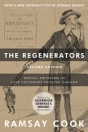
The Regenerators: Social Criticism in Late Victorian English Canada
About this ebook
No single word, Cook claims, catches more correctly the spirit of the late Victorian reform movement than 'regeneration': a concept originall meaning rebirth and applied to individuals, now increasingly used to describe social salvation.
In exploring the nature of social criticism and its complex ties to the religious thinking of the day, Cook analyses the thought of an extraordinary cast of characters who presented a bewildering array of nostrums and beliefs, from evolutionists, rationalists, higher critcis, and free-thinkers, to feminists, spiritualists, theosophists, socialists, communists, single-taxers, adn many more. THere is Goldwin Smith, 'the sceptic who needed God,' spreading gloom and doom from the comfort of the Grange; W.D. LeSueur, the 'positvist in the Post Office'; the heresiarch Dr R.M. Bucke, overdosed on Whitman, with his message of 'cosmis consciousness'; and a free-thinking, high-rolling bee-keeper named Allen Pringle, whose perorations led to 'hot, exciting nights in Napanee.' It is a world of such diverse figures as Phillips Thompson, Floar MacDonald Denison, Agnes Machar, J.W. Bengough, and J.S. Woodsworth, a world that made Mackenzie King.
Cook concludes that the path blazed by nineteenth-century religious liberals led not to the Kingdom of God on earth, as many had hoped, but, ironically, to the secular city.
Discover more
About the author
Ramsay Cook is a professor emeritus in the Department of History at York University and the former general editor of The Dictionary of Canadian Biography.