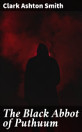
The Black Abbot of Puthuum
Clark Ashton Smith
Aug 2022 · DigiCat
Ebook
22
Pages
family_home
Eligible
info
About this ebook
In "The Black Abbot of Puthuum," Clark Ashton Smith weaves a rich tapestry of horror, fantasy, and cosmicism, immersing readers in a tale that blends the macabre with the surreal. Set against an opulent yet eerie backdrop, Smith's prose exudes a lyrical quality, punctuated by vivid imagery and evocative language that captures the otherworldly essence of his fictional realm. The novella, reflective of the early 20th-century literary movement, draws on themes of forbidden knowledge and the insignificance of humanity amidst the vastness of the cosmos, positioning it within the broader context of weird fiction alongside contemporaries like H.P. Lovecraft. Clark Ashton Smith was not only a writer but also a poet, artist, and sculptor, deeply immersed in the avant-garde movements of his time. His multifaceted creative background, infused with a fascination for the arcane and the fantastical, significantly influences this work, which bears the hallmarks of his unique imagination. Smith's experiences in the California landscape, as well as his interactions with other literary figures of the early 20th century, provided a fertile ground for his exploration of the grotesque and mystical. I wholeheartedly recommend "The Black Abbot of Puthuum" to readers who revel in richly crafted narratives that challenge conventional reality. Smith's masterful blending of horror and poetry invites you to confront existential terrors while exploring themes of decay and transformation. This novella is an essential addition to the collections of fans of weird literature and those yearning for an evocative plunge into the depths of the unknown.
In "The Black Abbot of Puthuum," Clark Ashton Smith weaves a rich tapestry of horror, fantasy, and cosmicism, immersing readers in a tale that blends the macabre with the surreal. Set against an opulent yet eerie backdrop, Smith's prose exudes a lyrical quality, punctuated by vivid imagery and ev...
Discover more
About the author
Clark Ashton Smith (1893-1961) was an American writer and poet, frequently associated with the fantasy, horror, and science fiction genres, and known for his contributions to the Cthulhu Mythos and his collaborations with contemporaries such as H.P. Lovecraft. Smith was largely self-educated, delving into the worlds of Gnosticism, Oriental esotericism, and French Symbolism, influences that permeate through his literary craft. In 'The Black Abbot of Puthuum' (1936), Smith transports his readers to a fantastical realm where nightmare and wonder coalesce with his distinctive blend of archaism and richly textured narrative. As much a poet as a prose writer, Smith imbued his tales with a lyrical quality that balances the macabre with the beautiful, earning him a place as one of the 'big three' of Weird Tales, alongside Lovecraft and Robert E. Howard. Smith's work is characterized by his vivid imagination, ornate language, and the exploration of philosophical themes amidst otherworldly landscapes. Though not as prolific as some of his peers, Smith's contribution to speculative fiction remains influential, with 'The Black Abbot of Puthuum' reflecting his capacity to conjure darkly entrancing worlds that hint at the underlying vastness and strangeness of the universe.
Clark Ashton Smith (1893-1961) was an American writer and poet, frequently associated with the fantasy, horror, and science fiction genres, and known for his contributions to the Cthulhu Mythos and his collaborations with contemporaries such as H.P. Lovecraft. Smith was largely self-educated, del...
Rate this ebook
Tell us what you think.
Reading information
Smartphones and tablets
Install the Google Play Books app for Android and iPad/iPhone. It syncs automatically with your account and allows you to read online or offline wherever you are.
Laptops and computers
You can listen to audiobooks purchased on Google Play using your computer's web browser.
eReaders and other devices
To read on e-ink devices like Kobo eReaders, you'll need to download a file and transfer it to your device. Follow the detailed Help Center instructions to transfer the files to supported eReaders.