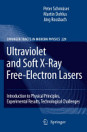
Free-Electron Lasers in the Ultraviolet and X-Ray Regime: Physical Principles, Experimental Results, Technical Realization, Edition 2
Feb 2014 · Springer Tracts in Modern Physics Book 258 · Springer
Ebook
231
Pages
About this ebook
The main goal of the book is to provide a systematic and didactic approach to the physics and technology of free-electron lasers. Numerous figures are used for illustrating the underlying ideas and concepts and links to other fields of physics are provided. After an introduction to undulator radiation and the low-gain FEL, the one-dimensional theory of the high-gain FEL is developed in a systematic way. Particular emphasis is put on explaining and justifying the various assumptions and approximations that are needed to obtain the differential and integral equations governing the FEL dynamics. Analytical and numerical solutions are presented and important FEL parameters are defined, such as gain length, FEL bandwidth and saturation power. One of the most important features of a high-gain FEL, the formation of microbunches, is studied at length. The increase of gain length due to beam energy spread, space charge forces, and three-dimensional effects such as betatron oscillations and optical diffraction is analyzed. The mechanism of Self-Amplified Spontaneous Emission is described theoretically and illustrated with numerous experimental results. Various methods of FEL seeding by coherent external radiation are introduced, together with experimental results. The world’s first soft X-ray FEL, the user facility FLASH at DESY, is described in some detail to give an impression of the complexity of such an accelerator-based light source. The last chapter is devoted to the new hard X-ray FELs which generate extremely intense radiation in the Angstrøm regime. The appendices contain supplementary material and more involved calculations.
The main goal of the book is to provide a systematic and didactic approach to the physics and technology of free-electron lasers. Numerous figures are used for illustrating the underlying ideas and concepts and links to other fields of physics are provided. After an introduction to undulator radi...
Discover more
About the author
Prof. Dr. Peter Schmüser
Institut für Experimentalphysik
Universität Hamburg and DESY
Notkestr. 85
22607 Hamburg
Germany
Dr. Martin Dohlus
Institut für Experimentalphysik
Universität Hamburg and DESY
Notkestr. 85
22607 Hamburg
Germany
Prof. Dr. Jörg Rossbach
Institut für Experimentalphysik
Universität Hamburg and DESY
Notkestr. 85
22607 Hamburg
Germany
Dr. Christopher Behrens
Institut für Experimentalphysik
Universität Hamburg and DESY
Notkestr. 85
22607 Hamburg
Germany
Prof. Dr. Peter Schmüser
Institut für Experimentalphysik
Universität Hamburg and DESY
Notkestr. 85
22607 Hamburg
Germany
Dr. Martin Dohlus
Institut für Experimentalphysik
Universität Hamburg and DESY
Notkestr. 85
22607 Hamburg
Germany
Prof. Dr. Jörg Rossbach
Institut für Experimentalphysik
Univer...
Rate this ebook
Tell us what you think.
Reading information
Smartphones and tablets
Install the Google Play Books app for Android and iPad/iPhone. It syncs automatically with your account and allows you to read online or offline wherever you are.
Laptops and computers
You can listen to audiobooks purchased on Google Play using your computer's web browser.
eReaders and other devices
To read on e-ink devices like Kobo eReaders, you'll need to download a file and transfer it to your device. Follow the detailed Help Center instructions to transfer the files to supported eReaders.