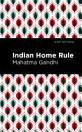
Indian Home Rule
Aug 2022 · DigiCat
Ebook
69
Pages
family_home
Eligible
info
About this ebook
In "Indian Home Rule," Mahatma Gandhi articulates a compelling vision for India's independence from British colonial rule, emphasizing grassroots empowerment and self-governance. Written in an accessible yet poignant prose, the text reflects Gandhi's philosophy of satyagraha, or truth-force, advocating for nonviolent resistance as a means to achieve political autonomy. The book situates itself within the broader context of early 20th-century nationalist movements, serving as a foundational text for understanding the ethical and moral dimensions of resistance against oppression. Mahatma Gandhi, a pivotal figure in the Indian independence movement, harnessed his legal training and experience in South Africa to craft a narrative that not only critiques colonialism but also fosters a sense of national identity among Indians. His profound belief in simple living and high thinking permeates this work, further shaped by his spiritual upbringing and the socio-political climate of his time, which called for a reevaluation of self-reliance in the face of external control. "Indian Home Rule" is essential reading for anyone interested in the complexities of colonialism, resistance, and the principles of ethical leadership. Its timeless message resonates in contemporary struggles for justice and autonomy, making it a pivotal text for scholars, activists, and anyone invested in the pursuit of freedom.
In "Indian Home Rule," Mahatma Gandhi articulates a compelling vision for India's independence from British colonial rule, emphasizing grassroots empowerment and self-governance. Written in an accessible yet poignant prose, the text reflects Gandhi's philosophy of satyagraha, or truth-force, advo...
Discover more
About the author
Mahatma Gandhi (1869-1948), born Mohandas Karamchand Gandhi, was an iconic leader of the Indian independence movement and an enduring symbol of nonviolent civil disobedience. Educated in law at the Inner Temple, London, Gandhi developed his socio-political beliefs during his years in South Africa, where he experienced firsthand the brutalities of racial discrimination. His philosophy of satyagraha, a form of nonviolent resistance, stemmed from a deep commitment to ahimsa, or non-harm, and was profoundly influential in India's struggle for freedom from British rule. Gandhi's seminal work, 'Indian Home Rule' (Hind Swaraj) published in 1909, offered a sharp critique of both British imperialism and modern industrial society. Written in the form of a dialogue, the book lays out Gandhi's vision for a self-sufficient, decentralized India, rooted in traditional values and rural life. Gandhi's writings convey his lifelong quest for truth and justice and have inspired countless individuals in the pursuit of social change. His literary style is marked by its simplicity, accessibility, and the profound moral force of his convictions. Gandhi's life and works serve as a beacon for peaceful activism and ethical leadership in a world often gripped by strife and oppression.
Mahatma Gandhi (1869-1948), born Mohandas Karamchand Gandhi, was an iconic leader of the Indian independence movement and an enduring symbol of nonviolent civil disobedience. Educated in law at the Inner Temple, London, Gandhi developed his socio-political beliefs during his years in South Africa...
Rate this ebook
Tell us what you think.
Reading information
Smartphones and tablets
Install the Google Play Books app for Android and iPad/iPhone. It syncs automatically with your account and allows you to read online or offline wherever you are.
Laptops and computers
You can listen to audiobooks purchased on Google Play using your computer's web browser.
eReaders and other devices
To read on e-ink devices like Kobo eReaders, you'll need to download a file and transfer it to your device. Follow the detailed Help Center instructions to transfer the files to supported eReaders.