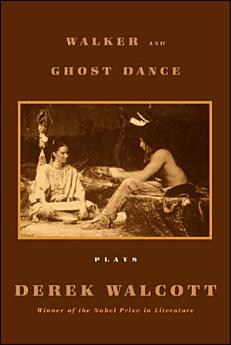
Walker and Ghost Dance: Plays
About this ebook
"These two verse dramas show 1992 Nobel prize winner Walcott (Omeros) at the top of his form. They are lean, focused, and powerful. . . . These are history plays at their most energetic. Highly recommended." — Library Journal
Walker, first performed in 1992 and revived (in a revised version) in 2001, is named for David Walker, the nineteenth-century black abolitionist from Boston who advocated violent revolt against slavery and galvanized his generation. In Walcott's hands, he is a classical hero, a political leader who is also a poet.
The Ghost Dance takes place on a cold winter's day in Dakota, when Kicking Bear brings news of a rebellion to a white widow named Catherine Weldon; when the alarm seeps into the tiny fort nearby, its mixed company splinters apart in the face of the perceived threat. First performed in 1989, it is a parable of American life at a crossroads, drawn from a story with a historical conclusion: Sitting Bull and his Sioux followers will die at the hands of the Army and Indian agents.
In Walker and The Ghost Dance, one of our greatest poets and playwrights brings to life two broken communities whose charismatic leaders would change American history.