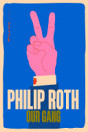
The Prague Orgy: A Novel
About this ebook
In quest of the unpublished manuscript of a martyred Yiddish writer, the American novelist Nathan Zuckerman travels to Soviet-occupied Prague in the mid-1970s. There, in a nation straightjacketed by totalitarian Communism, he discovers a literary predicament, marked by institutionalized oppression, that is rather different from his own. He also discovers, among the oppressed writers with whom he quickly becomes embroiled in a series of bizarre and poignant adventures, an appealingly perverse kind of heroism.
The Prague Orgy completes the trilogy and epilogue Zuckerman bound. It provides a startling ending to Roth's intricately designed magnum opus on the unforeseen consequences of art.
Discover more
About the author
PHILIP ROTH (1933–2018) won the Pulitzer Prize for American Pastoral in 1997. In 1998 he received the National Medal of Arts at the White House and in 2002 the highest award of the American Academy of Arts and Letters, the Gold Medal in Fiction, previously awarded to John Dos Passos, William Faulkner and Saul Bellow, among others. He twice won the National Book Award, the PEN/Faulkner Award, and the National Book Critics Circle Award. In 2005 The Plot Against America received the Society of American Historians' Prize for "the outstanding historical novel on an American theme for 2003–2004" and the W.H. Smith Award for the Best Book of the Year, making Roth the first writer in the forty-six-year history of the prize to win it twice.In 2005 Roth became the third living American writer to have his works published in a comprehensive, definitive edition by the Library of America. In 2011 he received the National Humanities Medal at the White House, and was later named the fourth recipient of the Man Booker International Prize. In 2012 he won Spain's highest honor, the Prince of Asturias Award, and in 2013 he received France's highest honor, Commander of the Legion of Honor.