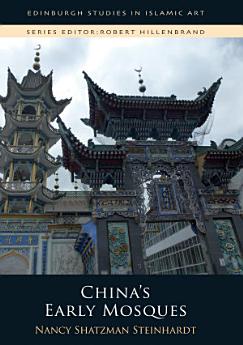
China's Early Mosques
Aug 2019 · Edinburgh University Press
Ebook
368
Pages
family_home
Eligible
info
About this ebook
Explains how the worship requirements of the mosque and the Chinese architectural system convergedReceived an honorable mention at the 2016 British-Kuwait Friendship Society Book PrizeWhat happens when a monotheistic, foreign religion needs a space in which to worship in China, a civilisation with a building tradition that has been largely unchanged for several millennia? The story of this extraordinary convergence begins in the 7th century and continues under the Chinese rule of Song and Ming, and the non-Chinese rule of the Mongols and Manchus, each with a different political and religious agenda. The author shows that mosques, and ultimately Islam, have survived in China because the Chinese architectural system, though often unchanging, is adaptable: it can accommodate the religious requirements of Buddhism, Daoism, Confucianism, and Islam.Key FeaturesIncludes case studies of China's most important surviving mosques, including approximately 70 premodern mosques, the tourist mosques in Xi'an and Beijing, and the Uyghur mosques in KashgarAims to build an understanding of the mosque at the most fundamental level, asking what is really necessary for Muslim worship spacePresents Chinese architecture as uniquely uniform in appearance and uniquely adaptable to something as foreign as IslamExplores the social and political aspects of China's architectural system, and the challenges faced by religious construction in premodern and contemporary Asia.
Explains how the worship requirements of the mosque and the Chinese architectural system convergedReceived an honorable mention at the 2016 British-Kuwait Friendship Society Book PrizeWhat happens when a monotheistic, foreign religion needs a space in which to worship in China, a civilisation wit...
Discover more
About the author
Nancy S. Steinhardt is Professor of East Asian Art and Curator of Chinese Art at the University of Pennsylvania where she has taught since 1982. She received her PhD at Harvard in 1981 where she was a Junior Fellow from 1978-81. Steinhardt taught at Bryn Mawr from 1981-1982. She has broad research interests in the art and architecture of China and China's border regions, particularly problems that result from the interaction between Chinese art and that of peoples to the North, Northeast, and Northwest.Steinhardt is author or co-author of Chinese Traditional Architecture (1984), Chinese Imperial City Planning (1990), Liao Architecture (1997), Chinese Architecture (2003), Reader in Traditional Chinese Culture (2005), Chinese Architecture and the Beaux-Arts (2011), Chinese Architecture in an Age of Turmoil, 200-600 (2014), and more than 70 scholarly articles. She is a recipient of grants from the Guggenheim Foundation, Institute for Advanced Study, National Endowment for the Humanities, American Council of Learned Societies, Getty Foundation, Chiang Ching-kuo Foundation, Social Science Research Council, American Philosophical Society, Graham Foundation for Advanced Study in the Fine Arts, Van Berchem Foundation, and Metropolitan Center for Far Eastern Art. She has given more than 300 public lectures or conference talks. Steinhardt is involved in international collaborations in China, Korea, and Japan. She has been an advisor, guest curator, or author for exhibitions at China Institute, Asia Society, the Metropolitan Museum, Japan Society, Chicago Art Institute, Smart Museum, and the Penn Museum.
Nancy S. Steinhardt is Professor of East Asian Art and Curator of Chinese Art at the University of Pennsylvania where she has taught since 1982. She received her PhD at Harvard in 1981 where she was a Junior Fellow from 1978-81. Steinhardt taught at Bryn Mawr from 1981-1982. She has broad researc...
Rate this ebook
Tell us what you think.
Reading information
Smartphones and tablets
Install the Google Play Books app for Android and iPad/iPhone. It syncs automatically with your account and allows you to read online or offline wherever you are.
Laptops and computers
You can listen to audiobooks purchased on Google Play using your computer's web browser.
eReaders and other devices
To read on e-ink devices like Kobo eReaders, you'll need to download a file and transfer it to your device. Follow the detailed Help Center instructions to transfer the files to supported eReaders.