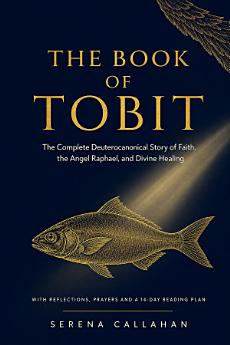
THE BOOK OF TOBIT: The Complete Deuterocanonical Story of Faith, the Angel Raphael, and Divine Healing
About this ebook
In the Assyrian city of Nineveh, a man named Tobit buries the dead his neighbors are too frightened to touch. It costs him everything. First his property, then his standing, and finally his sight. Six hundred miles east in Ecbatana, a young woman named Sarah has buried seven husbands, each one taken on the wedding night, and the servants in her own household have begun to say she is the reason.
On the same afternoon, in two cities that have never heard of each other, both of them ask God to let them die.
Both prayers are heard in the same hour. The answer walks into Tobit’s house disguised as a hired traveling companion, offers to guide his son along a long and dangerous road, and does not say who he really is until the debt is collected, the demon is gone, the marriage is made and the blindness is healed.
A story most readers were never handed
The Book of Tobit is scripture in Catholic and Orthodox Bibles and stands among the Apocrypha in the Anglican tradition. For a great many readers it simply vanished from the printed Bible somewhere in the last two centuries, which is why so few people today know why the archangel Raphael is pictured holding a fish, or where much of the church’s language about guardian angels came from.
This edition presents all fourteen chapters in a fresh, readable modern English rendering, prepared so the narrative moves as clearly for a reader today as it did for its first audience.
What you will find inside
• The full text of Tobit in clear modern English, chapter by chapter
• A short reflection after every chapter, tying the ancient story to ordinary life
• A written prayer at the close of each chapter
• Discussion questions for private study or for a group
• Three reading plans: one sitting, fourteen days, or eight weeks with a group
• Background chapters on the archangel Raphael, the demon Asmodeus, the fish remedy, and why Tobit appears in some Bibles and not others
• Guidance on praying through suffering and long seasons of waiting
• A glossary of names, places and terms, plus suggested further reading
Who this edition is for
Catholic and Orthodox readers who want a devotional companion to a book they already receive as scripture. Anglican and Protestant readers meeting Tobit for the first time. Parish groups, book clubs and families reading aloud together. And anyone who has prayed the same prayer twice and wondered whether it was heard.
Providence walks beside you long before you recognize it.
Discover more
About the author
Serena Callahan writes for readers who want the older and stranger corners of scripture opened up without needing a seminary degree in hand.
Her work centres on the books that sit at the edges of the Christian canon, texts that shaped the church’s imagination for centuries before quietly disappearing from most printed Bibles. She is drawn to them for the same reason most readers are, which is that they are unfamiliar, and to the thing most readers discover next, which is that they are not strange at all once you know what the first audience took for granted.
Her method is simple and does not change from book to book. Give the reader the whole text in language that actually moves. Stay long enough to explain what the original hearers understood without being told. Then hand back something to pray with, and get out of the way.
She works from the conviction that these books were written for ordinary people carrying ordinary griefs, and that they still read best that way. Out loud. In a room, with other people, at the pace of a life rather than a syllabus.


