The Dancing Plague (1518): Based on a Mysterious True Story — Compulsion, Community, Consequence
About this ebook
Based on a True Story of the Strasbourg Dancing Plague of 1518 — Compulsion, Community, and Consequence
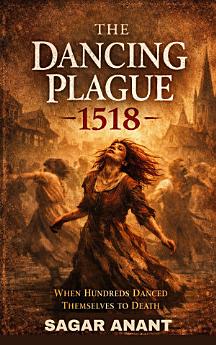
In the summer of 1518 a woman stepped into a Strasbourg street and began to move. She did not stop. Within days dozens, then hundreds, were dancing on the cobbles—without music, without festival, without reason. Some collapsed; some died. Authorities, desperate to help, built stages and hired musicians—only to see the phenomenon grow.
This book is a vivid, archival reconstruction of that baffling episode and a probing investigation into what it reveals about bodies, belief, and community. Drawing on municipal ledgers, clerical chronicles, private letters, and modern medical and social science, it examines competing explanations—ergotism, mass psychogenic illness, ritual meaning—and the consequences of well‑intentioned interventions. You will meet witnesses and clerks, physicians and magistrates, mothers and children; you will read terse ledger entries and ragged private notes; you will encounter scientific hypotheses and moral interpretations, each illuminating and each incomplete.
Part history, part forensic inquiry, part human portrait, this book asks how communities respond when ordinary agency breaks down and how attention, ritual, and compassion can sometimes amplify suffering. Essential for readers of narrative nonfiction, medical history, and cultural inquiry, it is a haunting reminder that the forces that moved Strasbourg in 1518 still shape our institutions and our lives today.
Discover more
About the author
Sagar Anant is an author who explores the space where reality begins to feel uncertain and unanswered questions refuse to fade. His work focuses on human behavior, hidden patterns, and real events that challenge logic, inviting readers to look beyond surface explanations and sit with the unknown a little longer.
Rather than offering easy answers, he writes to recreate experiences—moments where something unusual happened and no clear reason followed. His storytelling blends historical events with psychological depth, allowing readers to not just understand mysteries, but feel them.
Through his books, Sagar Anant aims to bring attention to the overlooked, the unexplained, and the quietly unsettling parts of history that continue to echo into the present.
Contact: sagaranantbooks@gmail.com