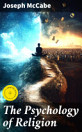
The Psychology of Religion: Enriched edition. A Skeptical Study of Faith, Cognition, Emotion, and the Social Roots of Belief
Joseph McCabe
Jul 2022 · DigiCat
Ebook
33
Pages
family_home
Eligible
info
About this ebook
In "The Psychology of Religion," Joseph McCabe embarks on a profound exploration of the intricate relationship between human psychology and religious belief. Combining insights from psychology, theology, and philosophy, McCabe scrutinizes the motivations behind religious adherence, the psychological effects of faith, and the sociocultural contexts that shape belief systems. His prose is both accessible and intellectually rigorous, situating his arguments within the broader discourse of early 20th-century skepticism toward organized religion and the burgeoning field of psychology. McCabe's meticulously researched perspectives invite the reader to consider how cognitive processes, emotions, and societal influences converge to form the complex tapestry of religious experience. McCabe, a prominent figure in the early secular humanist movement, was a prolific author and a fervent critic of dogmatic religious structures. His own journey from a priest to an outspoken advocate for rationalism and atheism deeply informed his analysis in this work. Through personal reflection and scholarly inquiry, McCabe aims to dismantle superstitions, offering readers an alternative understanding of humanity's innate quest for meaning beyond the confines of traditional religious frameworks. This seminal text is highly recommended for scholars, students, and curious minds alike. McCabe's astute observations and compelling arguments not only challenge established norms but also encourage introspection regarding the psychological foundations of belief. "The Psychology of Religion" serves as an invaluable resource and a thought-provoking catalyst for discussions about faith, rationality, and the human condition. In this enriched edition, we have carefully created added value for your reading experience: - A succinct Introduction situates the work's timeless appeal and themes. - The Synopsis outlines the central plot, highlighting key developments without spoiling critical twists. - A detailed Historical Context immerses you in the era's events and influences that shaped the writing. - A thorough Analysis dissects symbols, motifs, and character arcs to unearth underlying meanings. - Reflection questions prompt you to engage personally with the work's messages, connecting them to modern life. - Hand‐picked Memorable Quotes shine a spotlight on moments of literary brilliance. - Interactive footnotes clarify unusual references, historical allusions, and archaic phrases for an effortless, more informed read.
In "The Psychology of Religion," Joseph McCabe embarks on a profound exploration of the intricate relationship between human psychology and religious belief. Combining insights from psychology, theology, and philosophy, McCabe scrutinizes the motivations behind religious adherence, the psychologi...
About the author
Joseph McCabe (1867–1955) was a prolific English writer and speaker, well known for his outspoken criticism of religion and advocacy for rationalism and secularism. Born into a Roman Catholic household, McCabe initially became a Franciscan monk but later renounced his religious vows and became a staunch advocate for Freethought. McCabe's journey from fervent monk to one of the most prominent atheist thinkers of his time was marked by intellectual rigor and a ceaseless quest for truth. His apostasy was prompted by his deep-seated desire to reconcile faith with the emerging scientific understanding of the world, which inevitably led to a complete loss of belief in religious dogmas. Once he left the priesthood in 1896, McCabe dedicated his life to education and literature, producing a vast array of books on religion, history, science, and philosophy. His book 'The Psychology of Religion' exemplifies his analytical style in dissecting the cognitive and emotional foundations of religious belief. McCabe's work reflects his encyclopedic knowledge and his commitment to the dissemination of scientific skepticism and critical thinking. His literary style is characterized by clarity, erudition, and an often-critical examination of the socio-political impacts of religion. As a leading figure in the early 20th-century freethought movement, McCabe's contributions to secular thought made him both revered and controversial, leaving a lasting mark on the dialogue between faith and reason.
Joseph McCabe (1867–1955) was a prolific English writer and speaker, well known for his outspoken criticism of religion and advocacy for rationalism and secularism. Born into a Roman Catholic household, McCabe initially became a Franciscan monk but later renounced his religious vows and became a ...
Rate this ebook
Tell us what you think.
Reading information
Smartphones and tablets
Install the Google Play Books app for Android and iPad/iPhone. It syncs automatically with your account and allows you to read online or offline wherever you are.
Laptops and computers
You can listen to audiobooks purchased on Google Play using your computer's web browser.
eReaders and other devices
To read on e-ink devices like Kobo eReaders, you'll need to download a file and transfer it to your device. Follow the detailed Help Center instructions to transfer the files to supported eReaders.