About this ebook
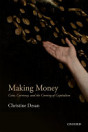
Money travels the modern world in disguise. It looks like a convention of human exchange - a commodity like gold or a medium like language. But its history reveals that money is a very different matter. It is an institution engineered by political communities to mark and mobilize resources. As societies change the way they create money, they change the market itself - along with the rules that structure it, the politics and ideas that shape it, and the benefits that flow from it. One particularly dramatic transformation in money's design brought capitalism to England. For centuries, the English government monopolized money's creation. The Crown sold people coin for a fee in exchange for silver and gold. 'Commodity money' was a fragile and difficult medium; the first half of the book considers the kinds of exchange and credit it invited, as well as the politics it engendered. Capitalism arrived when the English reinvented money at the end of the 17th century. When it established the Bank of England, the government shared its monopoly over money creation for the first time with private investors, institutionalizing their self-interest as the pump that would produce the money supply. The second half of the book considers the monetary revolution that brought unprecedented possibilities and problems. The invention of circulating public debt, the breakdown of commodity money, the rise of commercial bank currency, and the coalescence of ideological commitments that came to be identified with the Gold Standard - all contributed to the abundant and unstable medium that is modern money. All flowed as well from a collision between the individual incentives and public claims at the heart of the system. The drama had constitutional dimension: money, as its history reveals, is a mode of governance in a material world. That character undermines claims in economics about money's neutrality. The monetary design innovated in England would later spread, producing the global architecture of modern money.
Money travels the modern world in disguise. It looks like a convention of human exchange - a commodity like gold or a medium like language. But its history reveals that money is a very different matter. It is an institution engineered by political communities to mark and mobilize resources. As so...
Discover more
About the author
Christine A. Desan is the Leo Gottlieb Professor of Law at Harvard Law School. She teaches about the international monetary system, the constitutional law of money, constitutional history, political economy, and legal theory. She is the co-founder of Harvard's Program on the Study of Capitalism; with its co-director, Professor Sven Beckert (History), she has taught the Program's anchoring research seminar, the Workshop on the Political Economy of Modern Capitalism, since 2005. Desan's research explores money as a legal and political project, one that configures the market it sets out to measure.
Christine A. Desan is the Leo Gottlieb Professor of Law at Harvard Law School. She teaches about the international monetary system, the constitutional law of money, constitutional history, political economy, and legal theory. She is the co-founder of Harvard's Program on the Study of Capitalism; ...
Rate this ebook
Tell us what you think.
Reading information
Smartphones and tablets
Install the Google Play Books app for Android and iPad/iPhone. It syncs automatically with your account and allows you to read online or offline wherever you are.
Laptops and computers
You can listen to audiobooks purchased on Google Play using your computer's web browser.
eReaders and other devices
To read on e-ink devices like Kobo eReaders, you'll need to download a file and transfer it to your device. Follow the detailed Help Center instructions to transfer the files to supported eReaders.