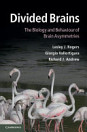
The Twofold Brain: Exploring Fundamental Questions about Brain Lateralization
About this ebook
This unique book deals with new and original ideas about asymmetry of the brain and its functions. It first demonstrates how asymmetry emerged early as a biological strategy long before language or culture evolved and was conserved because it worked. It also discusses how, from an evolutionary perspective, bilateral bodies create a fundamental problem of duplication – two sides mean redundant sensors, muscles, and neural circuits – but by biasing certain functions towards one side, organisms reduce conflict, speed up processing, and stabilize behaviour. This book then explores the role of interaction among asymmetric organisms in generating individual- or population-level asymmetries as evolutionarily stable strategies, showing that asymmetry thus appears to be a foundational aspect of all nervous systems. The authors' comprehensive approach to brain lateralization allows readers to understand it as an integral aspect of both large and small brains. Each chapter is crafted to answer specific questions, making this book accessible and engaging for both experts and general readers alike.
This book will appeal not only to specialists in neurosciences but also to a broader audience with a keen interest in understanding the intricacies of mental processes. Whether you're delving into the nuances of cognitive neuroscience or simply intrigued by the mysteries of the mind, this book offers a captivating journey into the fascinating world of lateralization in human and non-human species.
Discover more
About the author
Lesley J. Rogers (BSc(Hons), D.Phil, DSc, FAA, FRSN) is Emeritus Professor at the University of New England. She discovered asymmetry of brain and behaviour in the chick and the importance of light exposure of the embryo in its development. She has conducted research on brain and behavioural lateralization on a wide range of vertebrate and invertebrate species, including eye and hand preferences in primates (marmosets and orangutans). Her other areas of research are the neurobiology of learning and memory and neural changes during brain development. She is a Fellow of the Australian Academy of Science and a Fellow of the Royal Society of New South Wales.
Giorgio Vallortigara is Professor of Neuroscience and Director of the Animal Brain and Cognition Laboratory at the Centre for Mind/Brain Sciences of the University of Trento, Italy. His major research interest is the study of cognition in a comparative and evolutionary perspective, particularly the cerebral mechanisms underlying the use of geometry in spatial navigation and object and number representation in the animal brain. He has also studied the evolution of the asymmetry of the brain. He is a Fellow of the Royal Society of Biology and the recipient of several honours and prizes, including the Geoffrey de St. Hilaire Prize for Ethology and a doctorate honoris causa from the University of Ruhr in Germany.