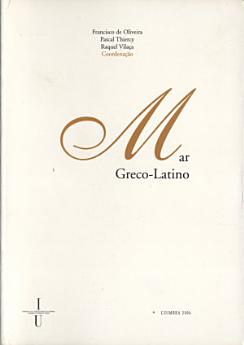
Mar greco-latino
About this ebook
About the author
Francisco de São José de Oliveira é Professor Catedrático de Nomeação Definitiva da Faculdade de Letras da Universidade de Coimbra. Foi sócio correspondente da Real Academia de Bones Letres da Catalunha, Presidente e Tesoureiro da Euroclassica (Fédération Européenne des Associations de Professeurs de Langues et de Civilisations Classiques), membro da Comissão Redatorial das revistas Humanitas, Ágora e Máthesis, Assessor Científico de Logo, Revista de Retórica y Teoría de la Communicación da Universidade de Salamanca e Consultor Académico da revista Letras da Pontifícia Universidade de Campinas — Brasil. Atualmente, prepara traduções anotadas dos tratados da República e das Leis, de Cícero, das Fenícias de Séneca e das Cartas de Plínio a Trajano. A nível internacional, colabora na produção de um DVD sobre o Ensino do Latim na União Europeia (liderado por P. Ieven, Bélgica), numa publicação sobre a situação das línguas clássicas na Europa (iniciativa de J. Bulwer, Inglaterra) e lidera o Projeto Europatria, com a colaboração de vários países europeus. Dedica-se em especial ao estudo das correntes de pensamento e ideias políticas na Antiguidade Clássica, às relações teatro/sociedade e à tradição clássica em Portugal. Destacam-se entre as suas publicações: "Typologie de l'invective politique chez Aristophane", in: Aristophane: la langue, la scène, la cité. Actes du colloque de Toulouse, Bari, 1987, p.481-505; "Idées politiques et morales de Pline l'Ancien", Coimbra, INIC, 1992, IX+438p.; "Portugal", in Der Neue Pauly, Stuttgart, 2002, p.516-526; "A Herança Grega em Portugal das mais remotas origens à Renascença", in América Latina y lo Clásico, I vol., Santiago de Chile, 2003, p.296-305; "Taxonomia das formas de constituição em Cícero", in: Nomos. Direito e sociedade na Antiguidade Clássica, edd. D. F. Leão — L. Rossetti, M. C. Z. Fialho, Coimbra-Madrid, 2004, p.351-367.
He is Tenured Professor at the Faculty of Letters of the University of Coimbra. He was corresponding member of the of the Real Academia de Bones Letres da Catalunha, President and Treasurer of Euroclassica (Fédération Européenne des Associations de Professeurs de Langues et de Civilisations Classiques), and member of the Editorial Board of the journals Humanitas, Ágora and Máthesis, Advisor to the University of Salamanca’s journal Logo, Revista de Retórica y Teoría de la Communicación and Academic Consultant for the journal Letras from the Pontifical University of Campinas, Brazil. He is currently preparing annotated translations of De re publica and De legibus by Cicero, of the Phoenissae by Seneca and of the letters of Pliny and Trajan. In the international context he is assisting in the production of a DVD about the teaching of Latin in the European Union (directed by P. Ieven, Belgium), and in a publication on the situation of classical languages in Europe (directed by J. Bulwer, UK), and he heads the collaborative Europatria Project involving several European countries. He specialises in the thought and political ideas of Classical Antiquity, in the relationship between theatre and society and in the classical tradition in Portugal. Particularly noteworthy among his publications are: "Typologie de l'invective politique chez Aristophane", in: Aristophane: la langue, la scène, la cité. Actes du colloque de Toulouse, Bari, 1987, p.481-505; Idées politiques et morales de Pline l'Ancien, Coimbra, INIC, 1992, IX+438p; "Portugal", in Der Neue Pauly, Stuttgart, 2002, p.516-526; “The Greek Legacy in Portugal from its most remote Rennaissance origins”, in América Latina y lo Clásico, I vol., Santiago de Chile, 2003, p.296-305; “The taxonomy of Cicero’s constitutional forms” in: Nomos. Direito e sociedade na Antiguidade Clássica, ed. D. F. Leão, L. Rossetti, M. C. Z. Fialho, Coimbra-Madrid, 2004, p.351-367.
Pascal Thiercy é professor de Língua e Literatura Gregas na Universidade de Brest, e especialista em Teatro Antigo, sobre o qual publicou numerosos estudos, nomeadamente Aristophane: Fiction et Dramaturgie (Belles Lettres, Paris, 1987, prémio Pierre-Brisson), Aristophane at l’ancienne Comédie (PUF, Que sais-je?, Paris, 1999), La Tragédie grecque (PUF, Que sais-je?, Paris, 2000), e a edição do Théâtre complet d’Arisphane dans la Bibliothéque de La Pléiade (Gallimard, 1997). É igualmente encenador, Presidente do Instituto Francês de Teatro Antigo (I.F.T.A.) e diretor do Centro de Estudos e Representações de Teatro Antigo (C.E.R.T.A.).
He teaches Greek Language and Literature at the University of Brest, and is a specialist in Ancient Theatre, on which he published several studies, namely Aristophane: Fiction et Dramaturgie (Belles Lettres, Paris, 1987, Pierre-Brisson award). Aristophane à l’ancienne Comédie (PUF, Que sais-je?, Paris, 1999), La Tragédie grecque (PUF, Que sais-je?, Paris, 2000), and the edition of Théâtre complet d’Arisphane dans la Bibliothéque de La Pléiade (Gallimard, 1997). He is also a stage director, President of the French Institute of Ancient Theatre (I.F.T.A.) and Director of Ancient Theatre Studies and Performance (C.E.R.T.A.).
Raquel Vilaça licenciou-se em História (pré-especialização em Arqueologia) pela Faculdade de Letras da Universidade de Coimbra, onde tem feito toda a sua carreira académica em regime de exclusividade. É professora associada com o título de agregada do Departamento de História, Arqueologia e Artes da FLUC. Exerce funções docentes no âmbito dos cursos de História e Arqueologia (1.º ciclo) e de Arqueologia e Território (2.º ciclo), lecionando (ou tendo lecionado) diversas cadeiras, nomeadamente Arqueologia Pré-Histórica Peninsular, Arqueologia Proto-Histórica Peninsular, Métodos e Técnicas de Escavação, Análise de Materiais Pré e Proto-históricos, Génese e Consolidação do Mundo Celta, Arqueologia de Laboratório, Expressões Rituais e Simbólicas na Pré e Proto-história, Seminário de Licenciatura, O Mundo Pré-romano de Portugal, O Povoamento Pré e Proto-histórico das Beiras, Espaços e Sociedades. É coordenadora do curso de Doutoramento (3.º ciclo) em Arqueologia da FLUC. É investigadora do Centro de Estudos Arqueológicos das Universidades de Coimbra e Porto. Tem como áreas de interesse principal as problemáticas da Idade do Bronze e da Idade do Ferro no contexto peninsular, nas suas múltiplas dimensões. Interessa-se ainda pela Arqueologia do Povoamento, Arqueologia dos Lugares Naturais, Expressões Rituais e Culturais e Metalurgia Arcaica. É autora de mais de 100 trabalhos, entre livros e artigos. Foi galardoada com o “Prémio Gulbenkian de Arqueologia" (1997).
She holds a Bachelor’s degree in History specializing in Archaeology from the Faculty of Letters of the University of Coimbra, where she has spent her whole academic career on an exclusively contract. She is an Associate Professor in the History, Archaeology and Arts Department at the Faculty of Letters of the University of Coimbra (FLUC). She teaches in the Bachelor’s Degree course in History and Archaeology and in the Master’s Degree course in Archaeology and Territory. She teaches or has taught a wide range of subjects, notably: peninsular pre-historic archaeology, peninsular proto-historic archaeology, excavation methods and techniques, the analysis of pre- and proto-historic materials, the genesis and consolidation of the Celtic world, archaeology laboratory, ritual and symbolic expressions in pre- and proto-history, a Bachelor’s degree seminar, the pre-Roman world in Portugal, the pre- and proto-historic settlement of the Beiras Province, and spaces and societies. She coordinates the Doctorate in Archaeology at FLUC. She is a researcher at the Archaeological Studies Centre at the University of Coimbra and Porto. Her main research interest areas are: the Bronze Age and Iron Age problematics in the peninsular context and its multiple dimensions. She is also interested in settlement archaeology, the archaeology of natural places, ritual and cultural expressions, and ancient metallurgy. She has written more than 100 books or articles. She was awarded the Gulbenkian Archaeology Prize (1997).