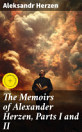
My Past and Thoughts: Restored Classics to Go Edition
About this ebook
Discover more
About the author
Aleksandr Herzen was a Russian writer, thinker, and political exile whose life was as turbulent and consequential as the century he helped define. Born into privilege in Moscow in 1812, he came of age amid the intellectual ferment of imperial Russia, became drawn to radical ideas in his youth, and later endured arrest, surveillance, and years of forced wandering in Europe after clashing with the Tsarist state. From his base in exile, he emerged as one of the most influential voices of nineteenth-century Russian thought, combining memoir, political reflection, journalism, and philosophical argument in a body of work that helped shape modern Russian prose and political consciousness. His writing is especially valued for its vivid honesty, moral urgency, and refusal to reduce history to slogans; he was deeply interested in freedom, responsibility, social justice, and the costs of revolution, while also remaining skeptical of dogma and authoritarian certainty. These concerns give his work lasting relevance today, as readers continue to wrestle with exile, censorship, political violence, and the tension between idealism and lived reality. Herzen's legacy lies not only in his role as a pioneer of Russian intellectual and autobiographical writing, but also in his humane, questioning voice, which still speaks powerfully to anyone seeking a clear-eyed account of conscience under pressure. Readers who enjoy memoirs, political thought, and richly observed reflections on history and society will find him especially rewarding.