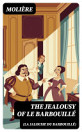
The Love-Tiff: A Hilarious Look at Love and Laughter in 17th Century France
Dec 2019 · Good Press
Ebook
143
Pages
family_home
Eligible
info
About this ebook
In "The Love-Tiff," Moli√®re masterfully intertwines comedy and social commentary in a one-act play that explores the intricacies of love and marital discord. Through sharp dialogue and vivid characterizations, Moli√®re delves into the complexities of romantic relationships, showcasing the ephemeral nature of passion and the absurdities of human behavior. Set against the backdrop of 17th-century France, the piece reflects the playwright'Äôs deftness at capturing societal norms and exposing the ridicule inherent in courtship and quarrels, all while employing elements of farce and wit that epitomize his literary style. Moli√®re, born Jean-Baptiste Poquelin, was a central figure in French classical literature and an innovator of comedic theater. His experiences in a theatrical troupe and firsthand observation of societal interactions greatly informed his writing. Having grappled with the social limitations of his time, Moli√®re sought to present human folly in a manner that was both entertaining and enlightening. His keen insights into human relationships were undoubtedly shaped by his tumultuous affairs and the societal pressures of 17th-century Parisian life. This engaging play is a must-read for enthusiasts of classic literature, scholars of French drama, and anyone intrigued by the dynamics of love and conflict. Moli√®re's unique blend of humor and critique invites readers to reflect on their own relationships while reveling in the timelessness of his wit. "The Love-Tiff" is not merely a comedic narrative; it is a profound observation on the nature of partnerships that resonates through the ages.
In "The Love-Tiff," Molière masterfully intertwines comedy and social commentary in a one-act play that explores the intricacies of love and marital discord. Through sharp dialogue and vivid characterizations, Molière delves into the complexities of romantic relationships, showcasing the epheme...
Discover more
About the author
The French dramatist Moliere was born Jean-Baptiste Poquelin on January 15, 1622, in Paris. The son of a wealthy tapestry merchant, he had a penchant for the theater from childhood. In 1636, he was sent off to school at the Jesuit College of Claremont and in 1643, he embarked upon a 13-year career touring in provincial theater as a troupe member of Illustre Theatre, a group established by the family Bejarts. He married a daughter of the troupe, Armande Bejart, in 1662 and changed his name to Moliere. The French King Louis XIV, becoming entranced with the troupe after seeing a performance of The Would-Be Gentleman, lent his support and charged Moliere with the production of comedy ballets in which he often used real-life human qualities as backdrops rather than settings from church or state. Soon, Moliere secured a position at the Palais-Royal and committed himself to the comic theater as a dramatist, actor, producer, and director. Moliere is considered to be one of the preeminent French dramatists and writers of comedies; his work continues to delight audiences today. With L'Ecole des Femmes (The School for Wives) Moliere broke with the farce tradition, and the play, about the role played by women in society and their preparation for it, is regarded by many as the first great seriocomic work of French literature. In Tartuffe (1664), Moliere invented one of his famous comic types, that of a religious hypocrite, a character so realistic that the king forbade public performance of the play for five years. Moliere gave psychological depth to his characters, engaging them in facial antics and slapstick comedy, but with an underlying pathos. Jean Baptiste Moliere died in 1673.
The French dramatist Moliere was born Jean-Baptiste Poquelin on January 15, 1622, in Paris. The son of a wealthy tapestry merchant, he had a penchant for the theater from childhood. In 1636, he was sent off to school at the Jesuit College of Claremont and in 1643, he embarked upon a 13-year caree...
Rate this ebook
Tell us what you think.
Reading information
Smartphones and tablets
Install the Google Play Books app for Android and iPad/iPhone. It syncs automatically with your account and allows you to read online or offline wherever you are.
Laptops and computers
You can listen to audiobooks purchased on Google Play using your computer's web browser.
eReaders and other devices
To read on e-ink devices like Kobo eReaders, you'll need to download a file and transfer it to your device. Follow the detailed Help Center instructions to transfer the files to supported eReaders.