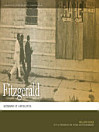
Fitzgerald: Geography of a Revolution

· Geographies of Justice and Social Transformation Ser Book 8 · University of Georgia Press
Ebook
272
Pages

About this ebook

This on-the-ground study of one square mile in Detroit was written in collaboration with neighborhood residents, many of whom were involved with the famous Detroit Geographical Expedition and Institute. Fitzgerald, at its core, is dedicated to understanding global phenomena through the intensive study of a small, local place.

Beginning with an 1816 encounter between the Ojibwa population and the neighborhood's first surveyor, William Bunge examines the racialized imposition of local landscapes over the course of European American settlement. Historical events are firmly situated in space--a task Bunge accomplishes through liberal use of maps and frequent references to recognizable twentieth-century landmarks.

More than a work of historical geography, Fitzgerald is a political intervention. By 1967 the neighborhood was mostly African American; Black Power was ascendant; and Detroit would experience a major riot. Immersed in the daily life of the area, Bunge encouraged residents to tell their stories and to think about local politics in spatial terms. His desire to undertake a different sort of geography led him to create a work that was nothing like a typical work of social science. The jumble of text, maps, and images makes it a particularly urgent book--a major theoretical contribution to urban geography that is also a startling evocation of street-level Detroit during a turbulent era.

A Sarah Mills Hodge Fund Publication

This on-the-ground study of one square mile in Detroit was written in collaboration with neighborhood residents, many of whom were involved with the famous Detroit Geographical Expedition and Institute. Fitzgerald, at its core, is dedicated to understanding global phenomena through the intensive ...

Discover more

About the author

William Bunge lived in the Fitzgerald neighborhood and taught geography at Wayne State University while writing this book. In 1970 the House Un-American Activities Committee included Bunge's name on a list of sixty-five "radical" speakers. Blacklisted and unable to find academic work, he fled to Canada, where he taught at several universities and (like the founder of critical geography, Henri Lefebvre) drove a cab. He is the author of three other books.
William Bunge lived in the Fitzgerald neighborhood and taught geography at Wayne State University while writing this book. In 1970 the House Un-American Activities Committee included Bunge's name on a list of sixty-five "radical" speakers. Blacklisted and unable to find academic work, he fled to ...

Rate this ebook

Tell us what you think.

Reading information

Smartphones and tablets
Install the Google Play Books app for Android and iPad/iPhone. It syncs automatically with your account and allows you to read online or offline wherever you are.
Laptops and computers
You can listen to audiobooks purchased on Google Play using your computer's web browser.
eReaders and other devices
To read on e-ink devices like Kobo eReaders, you'll need to download a file and transfer it to your device. Follow the detailed Help Center instructions to transfer the files to supported eReaders.