About this ebook
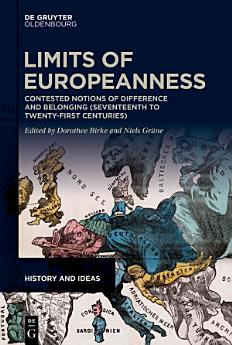
It brings together historical, literary, cultural, and art studies in exploring how topographies of Europe-related values figured in struggles over political domination and cultural hierarchies. The chapters focus on the relationships between imagined European centres and regions that have been regarded as being on the periphery of Europe: be it in geographical terms or in other respects such as political system, religious creed, or economic performance.
In a long-term view, the volume considers the enduring nature of the cognitive and normative patterns involved in this kind of mental mapping and thus makes an important contribution to the field of European studies.
Discover more
About the author
Dorothee Birke, University of Innsbruck, Austria; Niels Grüne, University of Innsbruck, Austria.