About this ebook
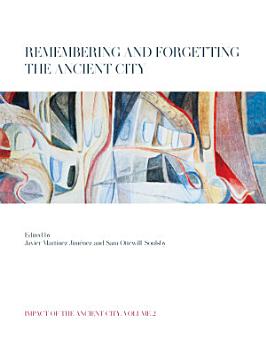
The Greco-Roman world is identified in the modern mind by its cities. This includes both specific places such as Athens and Rome, but also an instantly recognizable style of urbanism wrought in marble and lived in by teeming tunic-clad crowds. Selective and misleading this vision may be, but it speaks to the continuing importance these ancient cities have had in the centuries that followed and the extent to which they define the period in subsequent memory. Although there is much that is mysterious about them, the cities of the Roman Mediterranean are, for the most part, historically known. That the names and pasts of these cities remain known to us is the product of an extraordinary process of remembering and forgetting stretching back to antiquity that took place throughout the former Roman world. This volume tackles this subject of the survival and transformation of the ancient city through memory, drawing upon the methodological and theoretical lenses of memory studies and resilience theory to view the way the Greco-Roman city lived and vanished for the generations that separate the present from antiquity.
This book analyzes the different ways in which urban communities of the post-Antique world have tried to understand and relate to the ancient city on their own terms, examining it as a process of forgetting as well as remembering. Many aspects of the ancient city were let go as time passed, but those elements that survived, that were actively remembered, have shaped the many understandings of what it was. In order to do so, this volume assembles specialists in multiple fields to bring their perspectives to bear on the subject through eleven case studies that range from late Antiquity to the mid-twentieth century, and from the Iberian Peninsula to Iran. Through the examination of archaeological remains, changing urban layouts and chronicles, travel guides and pamphlets, they track how the ancient city was made useful or consigned to oblivion.
This book analyzes the different ways in which urban communities of the post-Antique world have tried to understand and relate to the ancient city on their own terms, examining it as a process of forgetting as well as remembering. Many aspects of the ancient city were let go as time passed, but those elements that survived, that were actively remembered, have shaped the many understandings of what it was. In order to do so, this volume assembles specialists in multiple fields to bring their perspectives to bear on the subject through eleven case studies that range from late Antiquity to the mid-twentieth century, and from the Iberian Peninsula to Iran. Through the examination of archaeological remains, changing urban layouts and chronicles, travel guides and pamphlets, they track how the ancient city was made useful or consigned to oblivion.
The Greco-Roman world is identified in the modern mind by its cities. This includes both specific places such as Athens and Rome, but also an instantly recognizable style of urbanism wrought in marble and lived in by teeming tunic-clad crowds. Selective and misleading this vision may be, but it s...
Discover more
About the author
Javier Martínez Jiménez is an archaeologist specialising in late antique and early medieval Iberia. He completed his thesis at Oxford in 2014, and has worked on issues of urbanism, water supply, identity and citizenship in the Visigothic period.
Sam Ottewill-Soulsby is a historian of the late antique and early medieval world. Since finishing his PhD at Cambridge in 2017 his interests have included the medieval reception of classical ideas of urbanism, interfaith relations and charismatic megafauna.
Javier Martínez Jiménez is an archaeologist specialising in late antique and early medieval Iberia. He completed his thesis at Oxford in 2014, and has worked on issues of urbanism, water supply, identity and citizenship in the Visigothic period.
Sam Ottewill-Soulsby is a historian of the late ant...
Rate this ebook
Tell us what you think.
Reading information
Smartphones and tablets
Install the Google Play Books app for Android and iPad/iPhone. It syncs automatically with your account and allows you to read online or offline wherever you are.
Laptops and computers
You can listen to audiobooks purchased on Google Play using your computer's web browser.
eReaders and other devices
To read on e-ink devices like Kobo eReaders, you'll need to download a file and transfer it to your device. Follow the detailed Help Center instructions to transfer the files to supported eReaders.