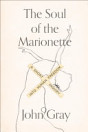
Feline Philosophy: Cats and the Meaning of Life
Nov 2020 · Sold by Farrar, Straus and Giroux
star
3 reviews
Ebook
128
Pages
family_home
Eligible
info
About this ebook
The author of Straw Dogs, famous for his provocative critiques of scientific hubris and the delusions of progress and humanism, turns his attention to cats—and what they reveal about humans' torturous relationship to the world and to themselves.
The history of philosophy has been a predictably tragic or comical succession of palliatives for human disquiet. Thinkers from Spinoza to Berdyaev have pursued the perennial questions of how to be happy, how to be good, how to be loved, and how to live in a world of change and loss. But perhaps we can learn more from cats--the animal that has most captured our imagination--than from the great thinkers of the world.
In Feline Philosophy, the philosopher John Gray discovers in cats a way of living that is unburdened by anxiety and self-consciousness, showing how they embody answers to the big questions of love and attachment, mortality, morality, and the Self: Montaigne's house cat, whose un-examined life may have been the one worth living; Meo, the Vietnam War survivor with an unshakable capacity for "fearless joy"; and Colette's Saha, the feline heroine of her subversive short story "The Cat", a parable about the pitfalls of human jealousy.
Exploring the nature of cats, and what we can learn from it, Gray offers a profound, thought-provoking meditation on the follies of human exceptionalism and our fundamentally vulnerable and lonely condition. He charts a path toward a life without illusions and delusions, revealing how we can endure both crisis and transformation, and adapt to a changed scene, as cats have always done.
The author of Straw Dogs, famous for his provocative critiques of scientific hubris and the delusions of progress and humanism, turns his attention to cats—and what they reveal about humans' torturous relationship to the world and to themselves.
The history of philosophy has been a predictably t...
Discover more
Ratings and reviews
3 reviews

Travis Craig
- Flag inappropriate
August 31, 2022
Gray's argument is well constructed. I disagree with his final assessment of things, but he is superb in stating his points and supporting his conjectures. However, Gray's main argument boils down to "Ignorance is bliss." Since cats aren't smart enough to think about things like meaning and happiness and other abstractions reserved for the human mind, they don't worry about such things. For us humans, we can only deal with such things as meaning and happiness by attaching ourselves to fictions, such as religions, philosophies, or worldly aspirations like fame, glory, and/or money. The book gets 4 out of 5 stars for exploring the gap between human desire for meaning and real-world results when trying to look for it. The book misses the final star for staying there. Gray doesn't realize that meaninglessness is as much a surrender to madness as any of the fictions he accusses of being other forms of surrender to madness.
About the author
John Gray is the author of many critically acclaimed books, including The Silence of Animals, The Immortalization Commission, Black Mass, and Straw Dogs. A regular contributor to The New York Review of Books, he has been a professor of politics at Oxford, a visiting professor at Harvard and Yale, and a professor of European thought at the London School of Economics. He now writes full-time.
John Gray is the author of many critically acclaimed books, including The Silence of Animals, The Immortalization Commission, Black Mass, and Straw Dogs. A regular contributor to The New York Review of Books, he has been a professor of politics at Oxford, a visiting professor at Harvard and Yale,...
Rate this ebook
Tell us what you think.
Reading information
Smartphones and tablets
Install the Google Play Books app for Android and iPad/iPhone. It syncs automatically with your account and allows you to read online or offline wherever you are.
Laptops and computers
You can listen to audiobooks purchased on Google Play using your computer's web browser.
eReaders and other devices
To read on e-ink devices like Kobo eReaders, you'll need to download a file and transfer it to your device. Follow the detailed Help Center instructions to transfer the files to supported eReaders.