About this ebook
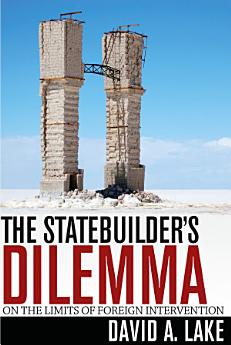
In Iraq, thrust into a statebuilding role it neither anticipated nor wanted, the United States eventually backed Nouri al-Malaki as the most favorable of a bad lot of alternative leaders. Malaki then used the support of the Bush administration to govern as a Shiite partisan, undermining the statebuilding effort and ultimately leading to the second failure of the Iraqi state in 2014. Ethiopia faced the same tradeoff in Somalia after the rise of a promising but irredentist government in 2006, invading to put its own puppet in power in Mogadishu. But the resulting government has not been able to build significant local support and legitimacy. Lake uses these cases to demonstrate that the greater the interests of the statebuilder in the target country, the more difficult it is to build a legitimate state that can survive on its own.
Discover more
About the author
David A. Lake is Jerri-Ann and Gary E. Jacobs Professor of Social Sciences and Distinguished Professor of Political Science at the University of California, San Diego. He is the author of Hierarchy in International Relations and Power, Protection, and Free Trade: International Sources of U.S. Commercial Strategy, 1887–1939 and the coeditor of Politics in the New Hard Times: The Great Recession in Comparative Perspective and The State and American Foreign Economic Policy, all from Cornell.