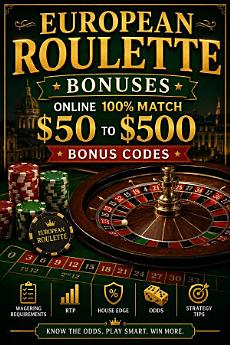
European Roulette Bonuses: Online 100% match $50 to $500 Bonus Codes: Wagering Requirements, RTP, House Edge, Odds, and Strategy Tips
About this ebook
A 100% match bonus from $50 to $500 can look like free money—but the real value depends on the rules hidden in the fine print. This ebook explains how wagering requirements, contribution rates, cash out caps, RTP, house edge, payout odds, and bankroll management determine whether a roulette bonus is worth claiming.
Unlike American roulette, European Roulette uses a single-zero wheel, giving players a better mathematical position and a lower house edge. That small difference matters. Over time, it can significantly improve expected return compared with double-zero games. This guide shows why serious players often prefer European Roulette when bonus terms allow it.
You’ll start by learning the complete rules of this popular RTG roulette game, including how the wheel works, how bets are placed, and what the table layout means. If roulette has ever looked confusing, this book makes it simple.
Then you’ll break down every major bet type:
Outside Bets – Red/Black, Even/Odd, High/Low, Dozens, Columns
Lower volatility options with better hit frequency
Inside Bets – Straight Up, Split, Street, Corner, Six Line
Higher payouts with lower probability
Special Bets –
Voisins du Zéro
Tiers du Cylindre
Orphans
Neighbor Bets
These classic European call bets are explained in plain language, including full number coverage and how experienced players use them.
This guide also dives deep into the numbers that matter:
European Roulette RTP
Single-zero house edge
True odds vs casino payouts
Expected value by bet type
Risk vs reward balance
You’ll also learn how bonus promotions really work. A roulette match bonus may come with restrictions such as reduced contribution rates, rollover requirements, max bet rules, or withdrawal caps. This ebook explains how to read those terms before depositing real money.
Inside this ebook:
Chapter 1: Full European Roulette rules for this RTG version
Chapter 2: Wheel layout and betting table explained
Chapter 3: Outside bets and lower-risk options
Chapter 4: Inside bets with higher payouts
Chapter 5: Voisins du Zéro, Tiers, Orphans, and special bets
Chapter 6: RTP, house edge, and the single-zero advantage
Chapter 7: Odds, payouts, and roulette math explained
Chapter 8: Bonus terms, wagering requirements, contribution rates, and cash out caps
Chapter 9: Bet sizing and clearing bonus requirements efficiently
Chapter 10: European Roulette strategy—what helps and what doesn’t
Chapter 11: Martingale, D’Alembert, and betting system reality
Chapter 12: Bankroll management during bonus play
Chapter 13: Using history tools and tracking results intelligently
Appendix A: Full roulette bets, odds, and payout chart
Appendix B: Complete special bet number map
Appendix C: Bonus wagering tracker
Whether you are a beginner or already comparing best online roulette bonuses, this guide helps you avoid common mistakes, understand real value, and approach roulette offers with sharper judgment.
Perfect for readers searching:
European Roulette bonus codes
Best roulette casino bonus
Single zero roulette strategy
European Roulette RTP
Roulette house edge explained
How roulette wagering requirements work
RTG roulette bonus guide
Roulette odds and payouts chart
Know the numbers. Read the terms. Use bonuses smarter. Play roulette with discipline instead of guesswork.
Discover more
Ratings and reviews
About the author
The author is the editor of casinoonlinegaming.com greenbaycasino.com and slotbonuses.info, where they publish educational articles analyzing casino games from a mathematical and probabilistic perspective. That work focuses on game structure, probability, and common misconceptions rather than betting advice, systems, or strategies.
Writing under the Games Explained Honestly imprint, the author specializes in clear, probability-first explanations of casino games and gambling mechanics. Rather than offering methods to win or promises of outcomes, the work examines how games are designed, how probabilities are fixed, and why player experience often conflicts with mathematical reality.
The books in this series draw on publicly available information, standard principles of probability, and established concepts from game design and behavioral psychology. They are written for readers who want understanding instead of folklore, clarity instead of illusion, and explanations grounded in structure rather than belief.
The author does not provide legal advice, gambling advice, financial advice, or recommendations. All content is educational in nature and intended to help readers better interpret chance-based games and their own experiences with them.