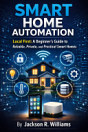
About this ebook
Most smart homes are broken by design. Your lights phone home to a server before turning on. Your camera feeds live on a stranger's hard drive. Your voice commands get shipped to a corporation that sells the transcripts. And when the internet goes down—or the company goes bankrupt—your expensive devices become paperweights.
There is a better way.
Local-First Smart Homes is a practical guide to building a smart home that answers to you. No cloud. No subscriptions. No telemetry. Just your hardware, your rules, your data.
You will learn how to:
Install and configure Home Assistant for local-only operation
Build a private Zigbee and Z-Wave mesh that works during outages
Create custom sensors with ESPHome in minutes
Write automations that survive internet failures
Set up local voice control that never sends your speech to anyone
Deploy Frigate for privacy-first camera security
Access your home remotely through your own encrypted tunnel
Version control your entire configuration with Git
Whether you are a privacy-conscious DIYer, a tech enthusiast, or a Home Assistant user ready to cut the cloud cord, this book gives you the tools and confidence to take back control.
Stop renting your smart home. Start owning it.
Discover more
About the author
Jackson R. Williams has been building local-first systems since before the term existed. He wrote his first Home Assistant automation in 2018, on a Raspberry Pi 3 that overheated so often he had to prop it against a frozen water bottle. That setup was unreliable, underpowered, and entirely his. He has been chasing the feeling of ownership ever since.
By day, Jackson works as a systems engineer, designing infrastructure that does not depend on anyone else's cloud. By night, he tears apart smart home devices to see how they really work. His garage contains a soldering station, a pile of partially disassembled Zigbee sensors, and at least three ESP32 boards that are definitely going to become something useful someday.
Jackson lives in the Pacific Northwest with his partner and two cats. The cats do not respect his automations. They walk in front of motion sensors anyway.