About this ebook
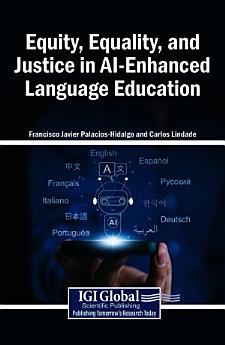
Equity, Equality, and Justice in AI-Enhanced Language Education critically examines the intersection of AI and social justice in foreign language education, exploring how equity-oriented perspectives can inform the design, use, and evaluation of AI-enhanced pedagogies. This book addresses key questions surrounding who benefits from AI-driven innovations, how issues of bias, accessibility, and representation shape learners’ opportunities and experiences, and what ethical frameworks can guide the equitable development and implementation of AI across diverse educational contexts. Covering topics such as algorithmic bias, fair learning ecosystems, and linguistic discrimination, this book is an excellent academic resource for graduate and doctoral students, language educators, teacher trainers, curriculum developers, coursebook authors, and more.
Discover more
About the author
Carlos Lindade is a Portuguese-Canadian Assistant Professor at the Faculty of Arts and Humanities, University of Porto (FLUP) and an experienced professional in English Language Teaching (ELT). He has a long record of training both pre- and in-service English Foreign Language teachers (EFL) and contributing to coursebook development for Portuguese learners of English. His research centers on ELT materials development, the pedagogical use of artificial intelligence in EFL teacher education, and technology-enhanced language learning (TELL). He combines classroom teaching, teacher training and research to support evidence-informed innovation in language education. [Editor]