About this ebook
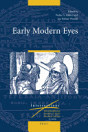
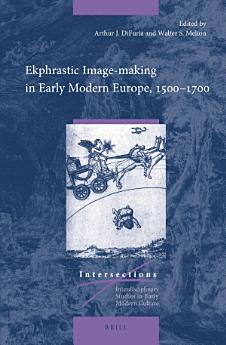
In epideictic oratory, ekphrasis is typically identified as an advanced rhetorical exercise that verbally reproduces the experience of viewing a person, place, or thing; more specifically, it often purports to replicate the experience of viewing a work of art. Not only what was seen, but also how it was beheld, and the emotions attendant upon first viewing it, are implicitly construed as recoverable, indeed reproducible.
This volume examines how and why many early modern pictures operate in an ekphrastic mode: such pictures claim to reconstitute works of art that solely survived in the textual form of an ekphrasis; or they invite the beholder to respond to a picture in the way s/he responds to a stirring verbal image; or they call attention to their status as an image, in the way that ekphrasis, as a rhetorical figure, makes one conscious of the process of image-making; or finally, they foreground the artist’s or the viewer’s agency, in the way that the rhetor or auditor is adduced as agent of the image being verbally produced.
Contributors: Carol Elaine Barbour, Ivana Bičak, Letha Ch’ien, James Clifton, Teresa Clifton, Karl Enenkel, Arthur DiFuria, Christopher Heuer, Barbara Kaminska, Annie Maloney, Annie McEwen, Walter Melion, Lars Cyril Nørgaard, Dawn Odell, April Oettinger, Shelley Perlove, Stephanie Porras, Femke Speelberg, Caecilie Weissert, Elliott Wise, and Steffen Zierholz.
In epideictic oratory, ekphrasis is typically identified as an advanced rhetorical exercise that verbally reproduces the experience of viewing a person, place, or thing; more specifically, it often purports to replicate the experience of viewing a work of art. Not only what was seen, but also how...
Discover more
About the author
Walter S. Melion, Ph.D. (1988, University of California, Berkeley) is Asa Griggs Candler Professor of Art History at Emory University. He has published widely on Netherlandish art and art theory, on early modern printmaking, and on meditative, mnemonic, and emblematic image-making, amongst other topics.
Arthur J. DiFuria, Ph.D. (2008, University of Delaware) is Chair and Professor of Art History at Savannah College of Art and Design. In addition to several articles on sixteenth-century antiquarianism, prints, and drawings, he is the editor of Genre Imagery in Early Modern Northern Europe: New Perspectives (Routledge, 2016) and the author of Maarten van Heemskerck’s Rome: Antiquity, Memory, and the Netherlandish Cult of Ruins (Brill, 2019).
Arthur J. DiFuria, Ph.D. (2008, University of Delaware) is Chair and Professor of Art History at Savannah College of Art and Design. In addition to several articles on sixteenth-century antiquarianism, prints, and drawings, he is the editor of Genre Imagery in Early Modern Northern Europe: New Perspectives (Routledge, 2016) and the author of Maarten van Heemskerck’s Rome: Antiquity, Memory, and the Netherlandish Cult of Ruins (Brill, 2019).
Walter S. Melion, Ph.D. (1988, University of California, Berkeley) is Asa Griggs Candler Professor of Art History at Emory University. He has published widely on Netherlandish art and art theory, on early modern printmaking, and on meditative, mnemonic, and emblematic image-making, amongst other ...
Rate this ebook
Tell us what you think.
Reading information
Smartphones and tablets
Install the Google Play Books app for Android and iPad/iPhone. It syncs automatically with your account and allows you to read online or offline wherever you are.
Laptops and computers
You can listen to audiobooks purchased on Google Play using your computer's web browser.
eReaders and other devices
To read on e-ink devices like Kobo eReaders, you'll need to download a file and transfer it to your device. Follow the detailed Help Center instructions to transfer the files to supported eReaders.