About this ebook
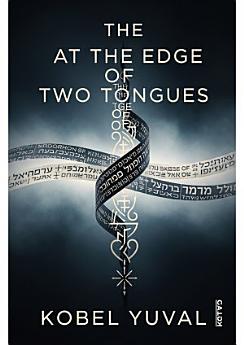
Growing up at the edge of two tongues is a story of perpetual translation: of thoughts, of emotions, of identity. It is not just about words, but about the worlds they hold—the colors, textures, and histories embedded in every syllable. My earliest memories are filled with the hum of translation. At home, the language of my ancestors unfolded in lullabies and proverbs, in laughter and admonition. Outside, another language pressed in, sharper, more precise, demanding my attention, asking me to mold myself according to its logic.
The journey of living between two languages is not just a personal one; it is a story threaded through families, communities, and nations. It is an inheritance and a challenge, a bridge and a barrier. Each language I spoke held a mirror to a different self, reflecting versions of me shaped by context, expectation, and desire. At times, I felt like a chameleon, shifting hues to blend in, to survive. At other times, I was torn apart by the tension of choosing, of belonging nowhere and everywhere at once.
This book is not only about my journey but also about the journeys of countless others who live at this linguistic threshold. The edge of two tongues is a place of negotiation, conflict, and, ultimately, transformation. It is about learning to inhabit the space between, to find meaning in ambiguity and possibility in contradiction.
My earliest recollections of language are steeped in the warmth of my family’s kitchen, where my grandmother’s stories would tumble out in rich, rolling phrases. She would gesture with her hands, her eyes bright with memory, as she described the village she left behind, the river that ran past her childhood home, the festivals that painted each year in vivid color. Her words carried the scent of the earth, the cadence of the seasons. They were words that tasted of home, that wrapped around me like a protective cloak.
Yet as soon as I stepped outside, the world shifted. At school, in the market, on the streets, the language changed. I listened to the clipped, efficient syllables of the city, the language of commerce and instruction, of rules and order. I learned to answer to a name that sounded different, to arrange my thoughts in unfamiliar patterns, to measure my worth by my fluency in a tongue that was not my own. With every lesson, every test, I felt the divide inside me widen, the pull of two worlds growing stronger.
For a long time, I believed that to belong, I had to choose. I tried to erase the traces of my first language in my speech, smoothing out the accent, swallowing the sounds that marked me as an outsider. I mimicked the gestures, the intonation, the idioms of the dominant culture, hoping to slip by unnoticed. But no matter how skillfully I performed, there was always something that gave me away—a hesitation, a misplaced word, a silence where a response should have been.
As I grew older, I began to understand that my struggle was not unique. I saw it mirrored in the faces of friends and strangers: the child who translated for her parents at the doctor’s office, the teenager who switched languages on the phone so her classmates wouldn’t understand, the grandmother who spoke only in her mother tongue, her stories growing more distant with each passing year. I realized that living at the edge of two tongues was not a deficiency, but a condition that shaped a particular kind of resilience—a capacity to adapt, to bridge gaps, to find beauty in complexity.
Language is more than a tool for communication. It is a vessel for memory, a marker of identity, a source of power and vulnerability. To lose a language is to lose a way of seeing the world, a set of possibilities for expression. To gain a new language is to expand the boundaries of the self, to enter into new relationships, new ways of being. But the process is rarely smooth or straightforward. It is marked by loss and longing, by moments of revelation and confusion.
In writing this book, I hope to capture some of the complexities, joys, and sorrows of living at the edge of two tongues. Each chapter will explore a different facet of the bilingual experience: from the intimacy of family language to the challenges of public performance, from the legacy of colonial histories to the possibilities of creative expression. I will draw on my own experiences, as well as those of others who have navigated similar paths, weaving together personal narrative, history, and reflection.
The edge of two tongues is a rich and fertile ground. It is a place of invention, where new forms of speech, thought, and identity emerge. It is also a site of struggle, where questions of belonging, loyalty, and authenticity are constantly negotiated. In this space, clarity and confusion coexist, and the search for meaning is ongoing.
When I look back on my childhood, I see a map of crossings and returns, of departures and homecomings. I remember the thrill of mastering a new word, the embarrassment of making a mistake, the pride of being able to move between worlds. I remember the ache of missing words, the frustration of not being able to say exactly what I meant. I remember the moments of connection—when a phrase in my mother’s language would slip into conversation, unnoticed and unremarked, a secret code that bound us together.
I have come to believe that to live at the edge of two tongues is to be perpetually in motion, always reaching, always becoming. It is to hold contradictions without resolution, to dwell in ambiguity, to embrace both the losses and the gains. It is a gift and a challenge, a source of sorrow and strength. It is, in the end, a way of being in the world that is both particular and universal.
As you read these pages, I invite you to enter into this space with me. Whether you speak one language or many, whether you have felt the pull of another tongue or not, I hope you will find something here that resonates—a glimpse of your own journey, a moment of recognition, a spark of empathy. The edge of two tongues is a borderland, but it is also a meeting place, a site of possibility.
About the author
Kobel Yuval is a writer and artist drawn to the fractures in language, power, and identity. Their work often explores the spaces between states—be they linguistic, psychological, or political—and the hidden architectures of control that shape human lives. With a background that informs a deep engagement with the textures of English and Russian, Yuval crafts narratives that are as much felt experiences as they are read stories. They are interested in the ghosts of memory, the weight of silence, and the unsettling beauty found in stark, bureaucratic landscapes.
Learning is their debut novel.