About this ebook
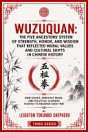
The narrative unfolds through multiple dimensions: historical evolution from pre-Tang Dynasty influences through the Song, Yuan, Ming, and Qing dynasties; philosophical foundations rooted in Taoism, Buddhism, and Confucianism; and martial principles that transformed physical techniques into pathways of personal growth and cultural expression. Readers will discover how the wide-open plains, harsh winters, and frequent conflicts of northern China shaped the development of expansive, flowing movements, wide stances, and powerful strikes that define Long Fist.
The book examines the systematic development of Northern Shaolin martial arts, including the Shaolin Temple's martial legacy and the integration of Chan Buddhist principles such as wu xin ("no-mind") and mindfulness into combat training. Key northern styles are explored in depth, including Long Fist (Changquan), Praying Mantis (with its legendary origins traced to Wang Lang), Eagle Claw (with its gripping techniques linked to General Yue Fei), and Monkey Style (created by Kou Sze). Each style's unique characteristics, historical development, and philosophical foundations are analysed.
The theoretical principles of Changquan are examined in detail, including fundamental movement principles such as extended strikes and kicks, fluid and continuous motion, circular and linear techniques, energy cultivation methods (breathing techniques and internal power generation), and strategic martial concepts including distance management, timing and rhythm, and adaptability. The book also covers philosophical training methodologies, including meditation techniques (sitting meditation and zhan zhuang standing meditation), mindfulness in movement, and holistic training approaches that integrate physical conditioning, spiritual development, and intellectual growth.
The cultural and historical significance of Changquan is explored, including its role in Chinese social structure, preservation and transmission of traditions through family lineages and teacher-student relationships, and its role as a symbol of Chinese cultural identity. A comparative analysis examines the differences between northern and southern Chinese martial arts styles, contrasting Long Fist's expansive, high-kicking techniques with the compact, close-range power of southern systems like Wing Chun and Hung Gar. The interrelationships between Changquan and other martial arts systems are traced, including its influence on Japanese Karate, Korean Taekwondo, and modern wushu.
Key historical figures are profiled, including Qi Jiguang (author of the military treatise Ji Xiao Xin Shu), Bodhidharma (legendary founder of Shaolin martial arts), and other pioneers who documented and preserved northern Chinese martial traditions. Appendices include a glossary of technical and philosophical terms (including Changquan, Taolu, Gong Bu, Qi, Nei Jin, Wu De, and Chan Si Jin) and recommended historical and philosophical readings.
Whether you are a martial artist, historian, sinologist, or practitioner of internal or external Chinese martial arts, this book offers a definitive scholarly yet accessible resource on one of the most dynamic and respected traditions of northern Chinese martial culture—a living legacy of strength, grace, and philosophical depth.
Discover more
About the author
Leighton Tokunbo Shepherd is a 67-year-old martial artist and teacher who has dedicated over five decades of his life to Judo. Based in Beijing, China, where he has lived most of his life, Shepherd's passion for martial arts began when he first stepped into a small dojo as a young man. Over the years, he has competed, taught, and mentored countless students, always focusing on the deeper lessons behind the techniques – resilience, balance, and adaptability. Now semi-retired, Shepherd continues to teach and write, offering accessible insights to both seasoned martial artists and complete beginners. His work bridges Eastern and Western martial traditions, with a particular focus on Chinese, Japanese, and East Asian heritage combat systems.