About this ebook
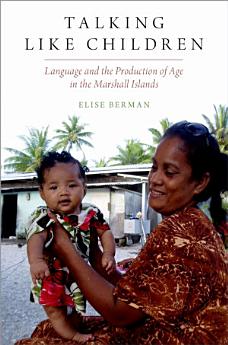
Children in the Marshall Islands do many things that adults do not. They walk around half naked. They carry and eat food in public without offering it to others. They talk about things they see rather than hiding uncomfortable truths. They explicitly refuse to give. Why do they do these things? Many think these behaviors are a natural result of children's innate immaturity. But Elise Berman argues that children are actually taught to do things that adults avoid: to be rude, inappropriate, and immature. Before children learn to be adults, they learn to be different from them. Berman's main theoretical claim therefore is also a novel one: age emerges through interaction and is a social production. In Talking Like Children, Berman analyzes a variety of interactions in the Marshall Islands, all broadly based around exchange: adoption negotiations, efforts to ask for or avoid giving away food, contentious debates about supposed child abuse. In these dramas both large and small, age differences emerge through the decisions people make, the emotions they feel, and the power they gain. Berman's research includes a range of methods -- participant observation, video and audio recordings, interviews, children's drawings -- that yield a significant corpus of data including over 80 hours of recorded naturalistic social interaction. Presented as a series of captivating stories, Talking Like Children is an intimate analysis of speech and interaction that shows what age means. Like gender and race, age differences are both culturally produced and socially important. The differences between Marshallese children and adults give both groups the ability to manipulate social life in distinct but often complementary ways. These differences produce culture itself. Talking Like Children establishes age as a foundational social variable and a central concern of anthropological and linguistic research.
Children in the Marshall Islands do many things that adults do not. They walk around half naked. They carry and eat food in public without offering it to others. They talk about things they see rather than hiding uncomfortable truths. They explicitly refuse to give. Why do they do these things? M...
About the author
Elise Berman is Assistant Professor of Anthropology at the University of North Carolina at Charlotte. She has spent more than two years living, teaching, and conducting research in the Marshall Islands, and earned her PhD in the department of Comparative Human Development at the University of Chicago. She has published in American Anthropologist, Journal of Linguistic Anthropology, Childhood, and Journal for the Scientific Study of Religion. She is currently working on a project on language, race, and education in the Marshallese diaspora.
Elise Berman is Assistant Professor of Anthropology at the University of North Carolina at Charlotte. She has spent more than two years living, teaching, and conducting research in the Marshall Islands, and earned her PhD in the department of Comparative Human Development at the University of Chi...
Rate this ebook
Tell us what you think.
Reading information
Smartphones and tablets
Install the Google Play Books app for Android and iPad/iPhone. It syncs automatically with your account and allows you to read online or offline wherever you are.
Laptops and computers
You can listen to audiobooks purchased on Google Play using your computer's web browser.
eReaders and other devices
To read on e-ink devices like Kobo eReaders, you'll need to download a file and transfer it to your device. Follow the detailed Help Center instructions to transfer the files to supported eReaders.