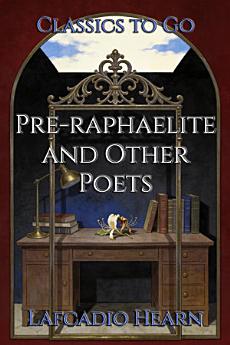
Pre-raphaelite and Other Poets: Restored Classics to Go Edition
About this ebook
About the author
Lafcadio Hearn was a restless, cosmopolitan writer whose life was shaped by movement across cultures, languages, and continents. Born in Greece to an Irish father and a Greek mother, raised partly in Ireland, and later living in the United States, the Caribbean, and Japan, he developed an outsider's sensibility that gave his writing its unusual sympathy and range. He began as a journalist and critic, but his career soon expanded into essays, translations, literary criticism, and vivid accounts of daily life and folklore, especially in Japan, where he eventually became a citizen and one of the most perceptive interpreters of the country for Western readers. His work is marked by a fascination with beauty, memory, spirituality, ghostly presences, and the fragile meeting point between tradition and modernity. He wrote with particular sensitivity about poetry and aesthetics, helping readers discover and appreciate the emotional intensity of nineteenth-century verse while also crafting prose that could make distant worlds feel intimate and alive. What keeps Hearn relevant today is his ability to cross cultural boundaries with curiosity rather than arrogance, listening carefully to voices often overlooked and preserving local customs, legends, and beliefs before they disappeared under modernization. His legacy endures in world literature, comparative cultural writing, and the art of the literary essay, where he remains a model of attentive, humane seeing. Readers who enjoy lyrical prose, ghost stories, travel writing, cultural history, and finely observed reflections on art and poetry are especially likely to be captivated by him.