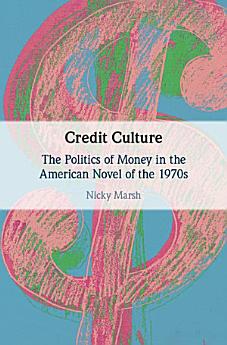
Credit Culture: The Politics of Money in the American Novel of the 1970s
Jul 2020 · Cambridge University Press
Ebook
221
Pages
About this ebook
This book offers a new reading of the relationship between money, culture and literature in America in the 1970s. The gold standard ended at the start of this decade, a moment which is routinely treated as a catalyst for the era of postmodern abstraction. This book provides an alternative narrative, one that traces the racialized and gendered histories of credit offered by the intertextual narratives of writers such as E.L Doctorow, Toni Morrison, Marilyn French, William Gaddis, Thomas Pynchon and Don De Lillo. It argues that money in the 1970s is better read through a narrative of political consolidation than formal rupture as these histories foreground the closing down, rather than opening up, of serious debates about what American money should be and who it should serve. These novels and this moment remain important because they alert us to imagine the alternative histories of credit that were imaginatively proposed but never realized.
This book offers a new reading of the relationship between money, culture and literature in America in the 1970s. The gold standard ended at the start of this decade, a moment which is routinely treated as a catalyst for the era of postmodern abstraction. This book provides an alternative narrati...
Discover more
About the author
Nicky Marsh is a Professor of English at the University of Southampton. She is also the co-editor of Show me the Money (2014)
Nicky Marsh is a Professor of English at the University of Southampton. She is also the co-editor of Show me the Money (2014)
Rate this ebook
Tell us what you think.
Reading information
Smartphones and tablets
Install the Google Play Books app for Android and iPad/iPhone. It syncs automatically with your account and allows you to read online or offline wherever you are.
Laptops and computers
You can listen to audiobooks purchased on Google Play using your computer's web browser.
eReaders and other devices
To read on e-ink devices like Kobo eReaders, you'll need to download a file and transfer it to your device. Follow the detailed Help Center instructions to transfer the files to supported eReaders.