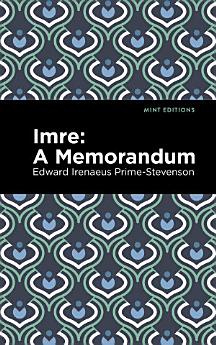
Imre: A Memorandum
About this ebook
At a café in Budapest, Oswald, a British ambassador in his thirties, meets the young, handsome Imre, a Hungarian military officer. The two develop a strong friendship through their shared interest in art, but as their relationship grows more serious, they begin spending hours upon hours sharing their innermost secrets. Eventually, their friendship turns to romance, a partnership between equals who respect and cherish one another despite the obstacles of an intensely homophobic society. Published in a time when homosexuality was largely criminalized, Imre: A Memorandum offered a hopeful narrative immersed in gay history that would prove both inspiring and instructional for generations to come.
With a beautifully designed cover and professionally typeset manuscript, this edition of Edward Irenaeus Prime-Stevenson’s Imre: A Memorandum is a classic work of American literature reimagined for modern readers.
Discover more
Ratings and reviews

- Flag inappropriate
About the author
Edward Irenaeus Prime-Stevenson (1858-1942) was an American writer. Born in Madison, New Jersey, Prime-Stevenson was raised by Paul E. Stevenson, a Presbyterian minister, and Cornelia Prime, who hailed from a family of prominent academics. After obtaining a law degree, Prime-Stevenson embarked on a career as a novelist, journalist, and impassioned defender of homosexuality. In 1901, he moved to Europe, where he would live for the rest of his life. Imre: A Memorandum (1906), a novel, was published under the pseudonym Xavier Mayne in Naples, Italy. Praised for its realistic and positive depiction of romance between two men, the novel has inspired renewed interest in recent years from scholars and readers interested in the historical representation of homosexuality in literature.