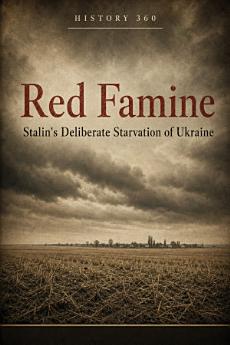
Red Famine: Stalin's Deliberate Starvation of Ukraine: Collectivization, Terror, and Five Million Dead
About this ebook
Between 1932 and 1934, between three and a half and five million Ukrainians died of starvation — not from drought, not from crop failure alone, but from a systematic campaign of grain confiscation, border sealing, and deliberate policy that turned a bad harvest into a catastrophe of human making. The Holodomor — from the Ukrainian words for hunger and death — remains one of the most contested and least understood tragedies of the twentieth century. The Soviet government denied it was happening even as millions died. Walter Duranty of the New York Times won a Pulitzer Prize for dispatches denying the famine's existence. Gareth Jones, the Welsh journalist who witnessed the starvation and reported it honestly, was discredited and died mysteriously at thirty. The January 1933 decrees that sealed Ukraine's borders — preventing starving peasants from leaving to search for food — are among the most damning documented evidence that the Soviet leadership knew exactly what it was doing. The Law of Five Ears criminalized the gleaning of a few stalks of grain from collective fields, making survival itself illegal. This book reconstructs the Holodomor from the inside: the village, the requisition brigade, the sealed border, the suppressed census, and the survivors who kept the memory alive through decades of Soviet denial. It is also the story of how historical truth survives state repression.