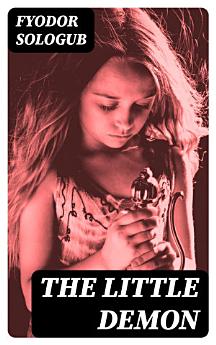
The Little Demon
Fyodor Sologub
Jun 2022 · DigiCat
Ebook
254
Pages
family_home
Eligible
info
About this ebook
Fyodor Sologub's 'The Little Demon' is a masterful portrayal of the grotesque and the farcical, set against the backdrop of a restless 20th-century Russia. With a vivid narrative style that is both incisive and darkly comic, the novel captures the absurdity and tragedy of existence through its central figure, Peredonov. In this phantasmagoria of human folly, Sologub reveals the dark underbelly of provincial life, shedding light on a society in turmoil, rife with decadence and disillusionment. His style is tinted with a distinctively bitter edge, lending the text a unique place within the broader spectrum of Russian literary accomplishment, and inviting comparisons with contemporaries delving into antihero narratives and social critique. Author Fyodor Sologub, born as Fyodor Kuzmich Teternikov, was an integral figure of Russian Symbolism, his works known for their exploration of dark, often mystic elements and a preoccupation with themes of evil and the irrational aspects of the human psyche. 'The Little Demon' arguably stands as Sologub's seminal work, reflecting his cynicism towards society and his disillusionment with the false veneer of human civility. The narrative is imbued with his critical perspective on the soul-crushing bureaucracy and the darker corners of human nature, both of which resonate with his own experiences and broader social observations of pre-revolutionary Russia. With biting satire and a compelling antihero, 'The Little Demon' is a must-read for enthusiasts of Russian literature and those interested in the psychological and moral underpinnings of society. Sologub's adept manipulation of the macabre and the comical makes his novel an unforgettable literary experience, etching the characters and their plights into the reader's consciousness. The work strikes a chord with anyone captivated by the complex interplay between individual ambitions and societal norms, as well as the eternal human struggle between the base and the sublime. In its censored form, 'The Little Demon' remains a provocative and enlightening descent into the less-travelled corridors of classic Russian fiction.
Fyodor Sologub's 'The Little Demon' is a masterful portrayal of the grotesque and the farcical, set against the backdrop of a restless 20th-century Russia. With a vivid narrative style that is both incisive and darkly comic, the novel captures the absurdity and tragedy of existence through its ce...
Discover more
About the author
Fyodor Sologub, born Fyodor Kuzmich Teternikov on March 1, 1863, was a significant figure in Russian symbolism and a prominent author of the late 19th and early 20th centuries. His most famous work, 'The Little Demon' ('Melkiy Bes'), published in 1907, encapsulates his literary style, which is characterized by its exploration of the darker sides of the human psyche and society. Sologub's early life was marked by poverty and hardship, experiences that would later imbue his writing with a sense of tragic inevitability and a preoccupation with the more macabre aspects of human existence. He adopted the pen name 'Sologub' as a reference to the solitary nature of his life and work. A teacher by profession, he infused his literary output with deep psychological insights and a penchant for dark fantasy, which often resulted in a disturbing yet fascinating aesthetic. Sologub's literary style is marked by a fascination with death, eroticism, and the grotesque, elements that have positioned him as a unique and powerful voice amidst the landscape of Russian literature. 'The Little Demon' stands as a testament to Sologub's narrative prowess, marrying an acerbic critique of small-town life with a penetrating look into the banality of evil. Although not as widely recognized internationally as his contemporaries like Tolstoy or Dostoevsky, Sologub's work remains a vital contribution to the tapestry of Russian symbolism and the broader spectrum of world literature.
Fyodor Sologub, born Fyodor Kuzmich Teternikov on March 1, 1863, was a significant figure in Russian symbolism and a prominent author of the late 19th and early 20th centuries. His most famous work, 'The Little Demon' ('Melkiy Bes'), published in 1907, encapsulates his literary style, which is ch...
Rate this ebook
Tell us what you think.
Reading information
Smartphones and tablets
Install the Google Play Books app for Android and iPad/iPhone. It syncs automatically with your account and allows you to read online or offline wherever you are.
Laptops and computers
You can listen to audiobooks purchased on Google Play using your computer's web browser.
eReaders and other devices
To read on e-ink devices like Kobo eReaders, you'll need to download a file and transfer it to your device. Follow the detailed Help Center instructions to transfer the files to supported eReaders.