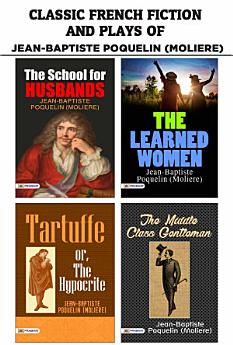
Classic French Fiction and Plays of Jean-Baptiste Poquelin (Moliere) : The School For Husbands/The Learned Women/The Middle Class Gentleman/Tartuffe Or The Hypocrite: Classic Literature Books for Young Adults: Classic French Fiction and Plays of Jean-Baptiste Poquelin Moliere : The School for Husbands/The Learned Women/The Middle Class Gentleman/Tartuffe or The Hypocrite
About this ebook
Key Aspects of the Play "The School for Husbands":
Comedic Exploration of Marriage: "The School for Husbands" satirizes the foibles and follies of husbands who try to control and mold their wives.
Humorous Character Interactions: Molière's play features amusing exchanges between characters, bringing out the comedic elements of the story.
Reflection on Social Norms: The play offers insights into the societal expectations and gender roles of the time, prompting contemplation on relationships.
Key Aspects of the Play "The Learned Women":
Gender Role Reversals: "The Learned Women" humorously portrays women who aspire to be scholars and intellectuals, challenging traditional gender norms.
Intellectualism and Comedy: Molière skillfully weaves intellectual pursuits and comedic situations, making the play both thought-provoking and entertaining.
Critique of Pretentiousness: The play critiques pretentiousness and the dangers of excessive pride in one's knowledge.
Key Aspects of the Play "The Middle Class Gentleman":
Social Climbing and Identity: "The Middle Class Gentleman" humorously portrays a bourgeois man's attempt to adopt aristocratic manners and identity.
Satirical Exploration of Social Aspirations: Molière's play satirizes the desire for social elevation and the comical situations that arise from the protagonist's efforts.
Cultural Critique: The play offers a critique of the social aspirations of the rising middle class in the context of 17th-century French society.
Key Aspects of the Play "Tartuffe or The Hypocrite":
Religious Hypocrisy: "Tartuffe" is a biting satire that exposes the hypocrisy of religious figures, particularly the character of Tartuffe.
Controversial Themes: The play addresses sensitive themes of religious hypocrisy, deception, and morality, sparking controversy during its time.
Powerful Character of Tartuffe: The character of Tartuffe remains one of Molière's most memorable creations, embodying duplicity and deceit.
Jean-Baptiste Poquelin, better known as Molière, was a prolific playwright and actor in 17th-century France. His plays, known for their wit and satire, have left a significant impact on the world of theatre and literature, and his legacy continues to be celebrated for its insightful commentary on human nature and society.