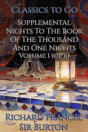
Supplemental Nights To The Book Of The Thousand And One Nights: Restored Classics to Go Edition
About this ebook
Discover more
About the author
Sir Richard Francis Burton was a remarkable Victorian polymath: soldier, explorer, linguist, diplomat, and one of the most daring translators of his age. Born in 1821 and educated in England, he spent much of his life moving across borders, both literal and intellectual, serving in India, traveling through Africa, the Middle East, and beyond, and mastering an astonishing range of languages and dialects. His literary reputation rests not only on his vivid travel writing and ethnographic curiosity but also on his bold, scholarly translations and annotations, which brought distant cultures to English readers with unusual frankness and energy. Among his most enduring achievements was his expansive work on the Arabic narrative tradition, where he combined storytelling, scholarship, and a fascination with human desire, wit, and folly. Burton's writing often explores the meeting of cultures, the tension between propriety and curiosity, and the richness of everyday life across the world, themes that still resonate in an age shaped by globalization and debate over translation, representation, and cultural exchange. His legacy endures because he was both a product of his imperial century and, in many ways, a restless challenger of its limits, willing to look beyond convention and insist on the complexity of other societies. Readers who enjoy adventurous scholarship, historical travel writing, and classic tales filtered through a daringly original mind will find him especially rewarding.