About this ebook
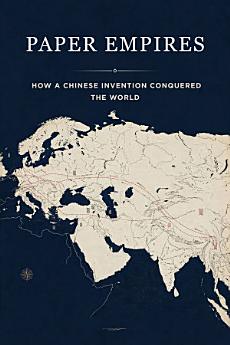
In 105 AD, a court official named Cai Lun stood before the Emperor of Han China and presented a material made from bark, hemp, and old fishing nets. Within a few centuries it had transformed Chinese government, scholarship, and religion. For three hundred years, China alone possessed it. Then came the Battle of Talas, a forgotten clash between the Tang empire and the armies of the Abbasid Caliphate, and the secret broke loose into the wider world.
From the libraries of Baghdad's House of Wisdom, where scholars translated the accumulated knowledge of Greece, Persia, and India onto cheap and abundant sheets, to the suspicious monasteries of medieval Europe still bound to sheepskin, to a print shop on the Rhine where Johannes Gutenberg combined paper with movable type and detonated the Reformation, this account follows a single Chinese invention across twenty centuries and four continents.
Readers of ancient and world history will recognize familiar names in an unfamiliar light: Marco Polo describing paper currency to a skeptical Europe, Martin Luther's theses spreading faster than any army could march, industrial chemists in 1843 solving a raw material crisis that threatened to choke the modern press before it ever reached full speed.
Paper Empires is a true account of the material that outlasted every dynasty, caliphate, and kingdom that ever tried to control it, and a reminder that the objects we overlook most often are sometimes the ones that changed everything.