About this ebook
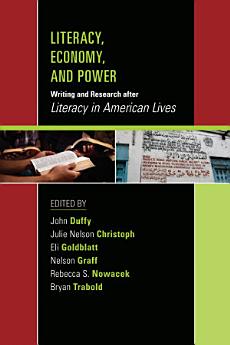
The essays cover many topics, including the editor of the first Native American newspaper, the role of a native Hawaiian in bringing literacy to his home islands, the influence of convents and academies on nineteenth-century literacy, and the future of globalized digital literacies. Contributors include Julie Nelson Christoph, Ellen Cushman, Kim Donehower, Anne Ruggles Gere, Eli Goldblatt, Harvey J. Graff, Gail E. Hawisher, Bruce Horner, David A. Jolliffe, Rhea Estelle Lathan, Min-Zhan Lu, Robyn Lyons-Robinson, Carol Mattingly, Beverly J. Moss, Paul Prior, Cynthia L. Selfe, Michael W. Smith, and Morris Young. Literacy, Economy, and Power also features an introduction exploring the scholarly impact of Brandt’s work, written by editors John Duffy, Julie Nelson Christoph, Eli Goldblatt, Nelson Graff, Rebecca Nowacek, and Bryan Trabold. An invaluable tool for literacy studies at the graduate or professional level, Literacy, Economy, and Power provides readers with a wide-ranging view of the work being done in literacy studies today and points to ways researchers might approach the study of literacy in the future.
About the author
John Duffy is the Francis O’Malley Director of the University Writing Program at the University of Notre Dame. His book, Writing from These Roots: The Historical Development of Literacy in a Hmong American Community, won the 2009 College Composition and Communication Outstanding Book Award.
Julie Nelson Christoph is the director of the Center for Writing, Learning, and Teaching at the University of Puget Sound. In 2010 she received a Fulbright Fellowship as a visiting lecturer at the State University of Zanzibar.
Eli Goldblatt is the director of first-year writing at Temple University. His book Because We Live Here: Sponsoring Literacy beyond the College Curriculum, won the 2008 Best Book Award from the Council of Writing Program Administrators.
Nelson Graff is the coordinator of English education at San Francisco State University. His research and articles have been published in English Journal, Journal of Adolescent and Adult Literacy, and Educational Research.
Rebecca S. Nowacek is the director of the Ott Memorial Writing Center at Marquette University. Her book Agents of Integration: Understanding Transfer as a Rhetorical Act was published by Southern Illinois University Press in 2011.
Bryan Trabold is an associate professor of English at Suffolk University. His articles on the rhetoric of South African resistance to apartheid have appeared in College English, South African Historical Journal, and College Composition and Communication.