About this ebook
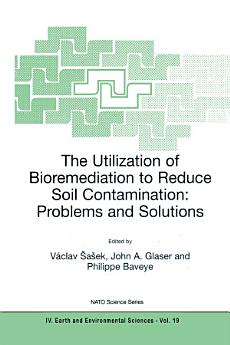
Traditional reliance on chemical analysis to understand the direction and extent of treatment in a bioremediation process has been found to be inadequate. Whereas the goal of bioremediation is toxicity reduction, few direct, reliable measures of this process are as yet available. Another area of intense discussion is the assessment of market forces contributing to the acceptability of bioremediation. Finally, another important component is a series of lectures and lively exchanges devoted to practical applications of different bioremediation technologies. The range of subjects covers a wide spectrum, encompassing emerging technologies as well as actual, full-scale operations. Examples discussed include landfarming, biopiling, composting, phytoremediation and mycoremediation. Each technology is explored for its utility and capability to provide desired treatment goals.
Advantages and limitations of each technology are discussed. The concept of natural attenuation is also critically evaluated since in some cases where time to remediation is not a significant factor, it may be an alternative to active bioremediation operations.
Traditional reliance on chemical analysis to understand the direction and extent of treatment in a bioremediation process has been found to be inadequate. Whereas the goal of bioremediation is toxicity reduction, few direct, reliable measures of this process are as yet available. Another area of ...
Discover more
Rate this ebook
Tell us what you think.
Reading information
Smartphones and tablets
Install the Google Play Books app for Android and iPad/iPhone. It syncs automatically with your account and allows you to read online or offline wherever you are.
Laptops and computers
You can listen to audiobooks purchased on Google Play using your computer's web browser.
eReaders and other devices
To read on e-ink devices like Kobo eReaders, you'll need to download a file and transfer it to your device. Follow the detailed Help Center instructions to transfer the files to supported eReaders.