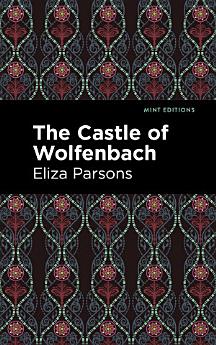
The Castle of Wolfenbach

· Graphic Arts Books
Ebook
202
Pages
Tools
Eligible

About this ebook

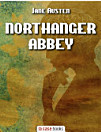
The Castle of Wolfenbach (1793) is a novel by Eliza Parsons. Employing themes common to the popular genre of Gothic fiction, Parsons crafts a chilling tale of murder and mystery that remains uniquely entertaining to this day. Referred to as a “horrid” novel in Jane Austen’s Northanger Abbey, The Castle of Wolfenbach was recognized as a terrifying precursor to such classics as Ann Radcliffe’s The Mysteries of Udolpho (1794), often considered the quintessential Gothic novel. Orphaned as a young girl, Matilda Weimar is raised by her uncle, a domineering figure whose attentions soon turn abusive. Left with no choice, Matilda flees with her trusted servant Albert. They arrive after some time in the harsh countryside at the cottage of Pierre and Jaqueline, who have only one bed and no food to offer. Desperate, Matilda and Albert make their way to the haunted Castle of Wolfenbach, where caretakers Joseph and Bertha offer to give them shelter. Although they seem hesitant, the caretakers reveal that the Count was a terrible man who left his wife and children to die in captivity and advise their unexpected guests to be gone by morning. As night falls, Matilda hears strange sounds coming from inside the castle, and sneaks up into the tower to investigate. There, she encounters a woman and her servant, who are surprised to find a stranger in their midst. Sensing their sympathy, Matilda recounts the story of her life. The next day, after Matilda and Albert have left for France, the castle burns to the ground—but its mystery remains. With a beautifully designed cover and professionally typeset manuscript, this edition of Eliza Parsons’ The Castle of Wolfenbach is a classic of British horror fiction reimagined for modern readers.
The Castle of Wolfenbach (1793) is a novel by Eliza Parsons. Employing themes common to the popular genre of Gothic fiction, Parsons crafts a chilling tale of murder and mystery that remains uniquely entertaining to this day. Referred to as a “horrid” novel in Jane Austen’s Northanger Abbey, The ...

Discover more

About the author

Eliza Parsons (1739-1811) was an English novelist. Born in Plymouth, Devon, she was the only daughter of wine merchant John Phelp and his wife Roberta. She grew up in relative prosperity, receiving an education uncommon for women of her time. In 1760, Eliza married James Parsons, with whom she raised three sons and five daughters. During the American Revolutionary War, Parsons’ turpentine business suffered terrible losses, forcing the family to live frugally. When a warehouse fire destroyed his property, and as illness and death tore through their tight-knit family, Eliza stepped in to provide for their children. Between 1790 and 1807, she wrote nineteen novels and a play, specializing in the Gothic style popular in England and Europe in the late nineteenth century. Although fame and financial stability eluded her, she proved a consistent and skilled storyteller, earning moderate praise for her novel The Castle of Wolfenbach (1793). Although she frequently apologized for her writing in the prefaces to her works—which she used primarily to appeal to readers on behalf of her children—Parsons was a gifted creator of compelling fiction and a pioneering figure in English literary history.
Eliza Parsons (1739-1811) was an English novelist. Born in Plymouth, Devon, she was the only daughter of wine merchant John Phelp and his wife Roberta. She grew up in relative prosperity, receiving an education uncommon for women of her time. In 1760, Eliza married James Parsons, with whom she ra...

Rate this ebook

Tell us what you think.

Reading information

Smartphones and tablets
Install the Google Play Books app for Android and iPad/iPhone. It syncs automatically with your account and allows you to read online or offline wherever you are.
Laptops and computers
You can listen to audiobooks purchased on Google Play using your computer's web browser.
eReaders and other devices
To read on e-ink devices like Kobo eReaders, you'll need to download a file and transfer it to your device. Follow the detailed Help Center instructions to transfer the files to supported eReaders.