About this ebook
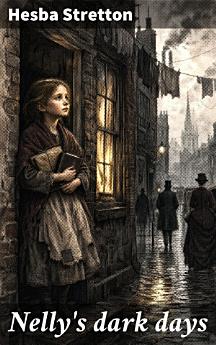
In Nelly's Dark Days, Hesba Stretton offers a deeply affecting work of Victorian domestic and evangelical fiction, tracing the trials of a poor child whose suffering exposes the moral failures of urban society while affirming the possibility of spiritual renewal. Written in Stretton's characteristically lucid, compassionate prose, the novel combines emotional intensity with social observation, depicting poverty, neglect, and the fragility of childhood in a manner intended both to move and to instruct. Like much nineteenth-century religious fiction for family readers, it joins sentiment, realism, and moral purpose, situating private sorrow within the wider concerns of Christian philanthropy and reform. Stretton, the pen name of Sarah Smith, was among the most influential English writers of religious fiction for the young and for working-class readers. Her long engagement with poverty, charitable work, and evangelical culture strongly shaped her writing, which sought to awaken middle-class consciences to the conditions of the poor. Nelly's Dark Days reflects her enduring concern with children's vulnerability and with fiction as an instrument of moral persuasion and social sympathy. This book is especially recommended to readers interested in Victorian literature, children's literature, and the intersection of religion and social reform. It remains a poignant, historically revealing, and ethically serious novel whose emotional force has not entirely faded.
In Nelly's Dark Days, Hesba Stretton offers a deeply affecting work of Victorian domestic and evangelical fiction, tracing the trials of a poor child whose suffering exposes the moral failures of urban society while affirming the possibility of spiritual renewal. Written in Stretton's characteris...
Discover more
Rate this ebook
Tell us what you think.
Reading information
Smartphones and tablets
Install the Google Play Books app for Android and iPad/iPhone. It syncs automatically with your account and allows you to read online or offline wherever you are.
Laptops and computers
You can listen to audiobooks purchased on Google Play using your computer's web browser.
eReaders and other devices
To read on e-ink devices like Kobo eReaders, you'll need to download a file and transfer it to your device. Follow the detailed Help Center instructions to transfer the files to supported eReaders.