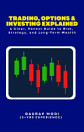
About this ebook
Instead of encouraging constant market activity, this guide focuses on knowing when not to trade.
At the center of the framework is the No Trading Zone (NTZ)—a predefined price range designed to help traders filter out periods of market indecision—combined with a specific 90-minute trading window.
Inside the book, you'll explore:
Why taking more trades can lead to worse trading decisions
How boredom, FOMO, frustration, and emotional decision-making contribute to overtrading
The concept of selective participation
Why market conditions can change throughout a trading session
How the 90-minute trading window fits into the framework
What the No Trading Zone is and how its boundaries are established
How previous-day and pre-market highs and lows are used to construct the NTZ
How to distinguish potential breakouts from false breakouts
Why confirmation matters before entering a trade
The break-and-retest concept
How confluence can improve the quality of a trade idea
The importance of predefined risk and position sizing
Stop-loss discipline and maximum daily loss limits
How revenge trading, greed, and FOMO can affect execution
Why “no trade” can be a valid decision
How to use historical replay and forward testing to evaluate a framework
Why maintaining a trading journal is essential for reviewing decisions
Common mistakes that can undermine trading discipline
A structured 20-session experiment for testing the framework
The book also includes practical visual examples, trading checklists, a professional trading-journal template, hypothetical case studies, and a complete trading playbook.
The framework is built around a simple philosophy: trading does not improve simply by increasing activity. It improves through selectivity, patience, structure, and disciplined risk management.
The book explicitly presents the 90-minute window as a framework to test rather than a guaranteed formula, acknowledging that different instruments and markets can behave differently.