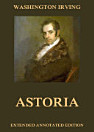
Astoria: Or, Enterprise Beyond the Rocky Mountains: The Pacific Fur Trade and America's First Claim to Oregon Territory
About this ebook
In 1811, John Jacob Astor's traders established Fort Astoria at the mouth of the Columbia River, envisioning a fur-trading empire that would span from the Rockies to the Pacific. Though the venture collapsed within two years, surrendered to British forces during the War of 1812, its impact on American expansion proved immeasurable.
Irving transforms the expedition's original papers into a gripping narrative of survival, diplomacy, and discovery. Readers witness harrowing journeys across hostile terrain, encounters with diverse Native American tribes, and the establishment of America's first territorial claim on the Oregon coast.
This foundational work of American historical literature captures the spirit of westward expansion and the visionary entrepreneurs who shaped the continent's destiny.
Discover more
About the author
Washington Irving (1783–1859) was a pioneering American author, essayist, and historian. Celebrated for iconic works such as "The Legend of Sleepy Hollow" and "Rip Van Winkle," he was the first American writer to achieve international fame. Irving’s career spanned fiction, travel writing, biography, and social commentary, often blending engaging storytelling with meticulous historical research. His works continue to influence American literature and historical narrative today.