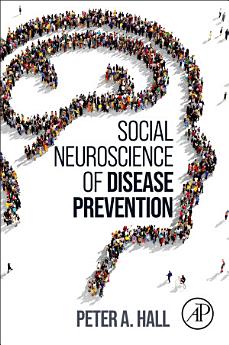
Social Neuroscience of Disease Prevention
Peter A. Hall
Dec 2024 · Elsevier
Ebook
200
Pages
About this ebook
Many diseases have the potential to affect the brain. This is true of chronic diseases (e.g., diabetes, heart disease), infectious diseases (e.g., COVID-19, HIV), pre-disease states (e.g., hypertension, obesity), and specific traumatic events (e.g., concussion, stroke). On the other hand, neurodegenerative conditions and some psychiatric disorders are largely understood to be diseases of the brain itself. It is therefore quite natural to think about the brain as an outcome variable in relation to physical and psychiatric illness. However, it is also possible to consider the brain as a mechanism by which a disease may impact an entirely different outcome of interest, or even as a predictor of disease onset itself. Importantly, these effects may be revealed only under certain environmental conditions, and so the social context of behavior, illness and health are all important to consider. Social Neuroscience of Disease Prevention examines the role of the human brain in health and disease from the above multi-perspective framework, wherein the brain can be a predictor, mediator or outcome of physical and psychiatric illness. Importantly, the social context is examined carefully as a potential moderator of all of these effects, and the rate at which they occur. This book is written with a narrative style that is intended to prioritize readability, self-reflection and critical thought, more so than a pure computational or technical focus. It is appropriate for scientists and trainees from a wide variety of backgrounds, including the medical sciences, the neurosciences, allied health sciences and public health.
- Identifies how the brain predicts, mediates and manifests disease in social context
- Links neurobiology to population level social dynamics
- Reviews brain health impacts of early adversity, exercise, stress, nutrition, and more
- Discusses preventive medicine from a translational neuroscience perspective
Many diseases have the potential to affect the brain. This is true of chronic diseases (e.g., diabetes, heart disease), infectious diseases (e.g., COVID-19, HIV), pre-disease states (e.g., hypertension, obesity), and specific traumatic events (e.g., concussion, stroke). On the other hand, neurode...
About the author
Peter Hall is a Full Professor in the School of Public Health & Health Systems at the University of Waterloo. His research aims to identify causal determinants of health-related behaviors, visceral states, and cognitions using methods from cognitive neuroscience, social psychology and public health. Of specific interest are: 1) reciprocal relationships between lifestyle factors and brain health, 2) transcranial magnetic stimulation (rTMS), and 3) brain imaging in population health.
Peter Hall is a Full Professor in the School of Public Health & Health Systems at the University of Waterloo. His research aims to identify causal determinants of health-related behaviors, visceral states, and cognitions using methods from cognitive neuroscience, social psychology and public heal...
Rate this ebook
Tell us what you think.
Reading information
Smartphones and tablets
Install the Google Play Books app for Android and iPad/iPhone. It syncs automatically with your account and allows you to read online or offline wherever you are.
Laptops and computers
You can listen to audiobooks purchased on Google Play using your computer's web browser.
eReaders and other devices
To read on e-ink devices like Kobo eReaders, you'll need to download a file and transfer it to your device. Follow the detailed Help Center instructions to transfer the files to supported eReaders.