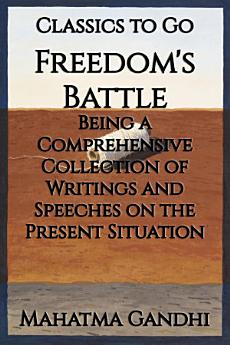
Freedom's Battle: Restored Classics to Go Edition
About this ebook
Discover more
About the author
Mohandas Karamchand Gandhi, known to the world as Mahatma Gandhi, was born in 1869 in Gujarat, India, and went on to become one of the most influential moral and political figures of the twentieth century. Trained in law, he developed his public voice through years of struggle in South Africa before returning to India to lead a mass movement against British colonial rule. What made Gandhi extraordinary was not only his leadership in the fight for independence, but the power of his writing and speeches, which combined clear argument, moral urgency, and a deep faith in truth, discipline, and nonviolence. His work consistently explored themes of justice, self-rule, civil disobedience, religious tolerance, simplicity, and the dignity of ordinary people, all of which remain strikingly relevant in a world still marked by conflict, inequality, and political division. Gandhi's legacy endures because he showed that ethical conviction can be a force for social change, and that resistance need not depend on hatred or violence. For modern readers, he remains a challenging and inspiring figure: a thinker who insisted that personal conduct and public action must be joined, and that freedom is meaningful only when it is grounded in responsibility and compassion. Readers interested in civil rights, political history, spiritual reflection, and the moral dimensions of activism will find his life and writings especially rewarding.